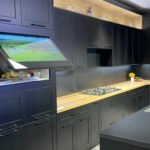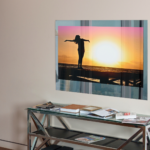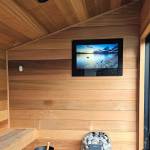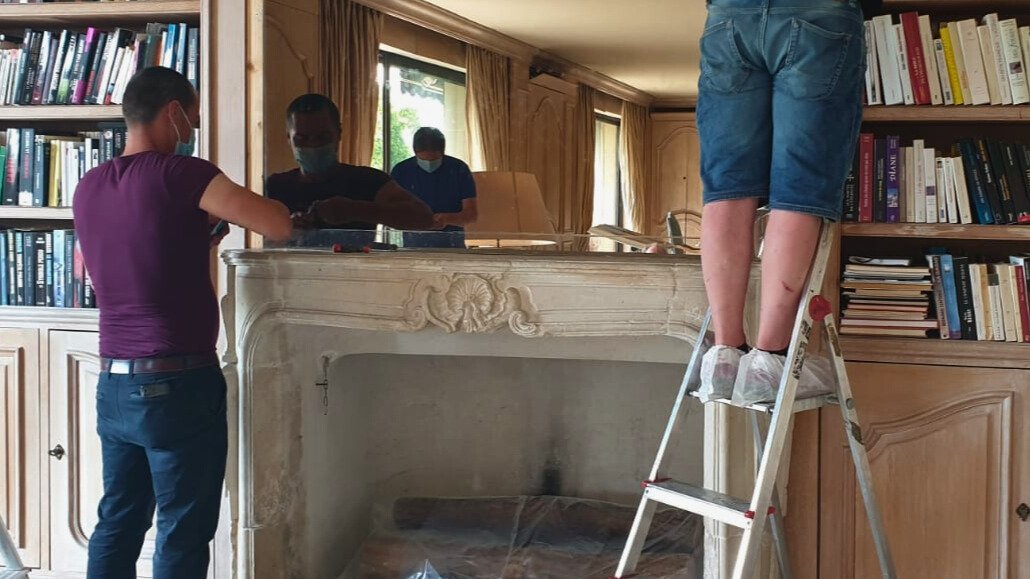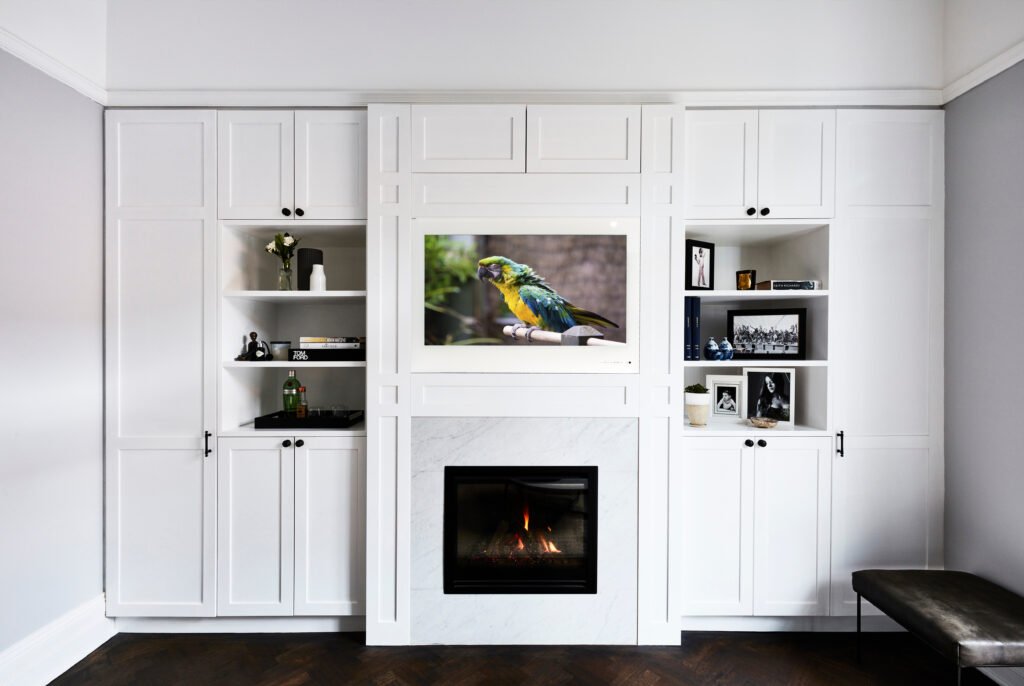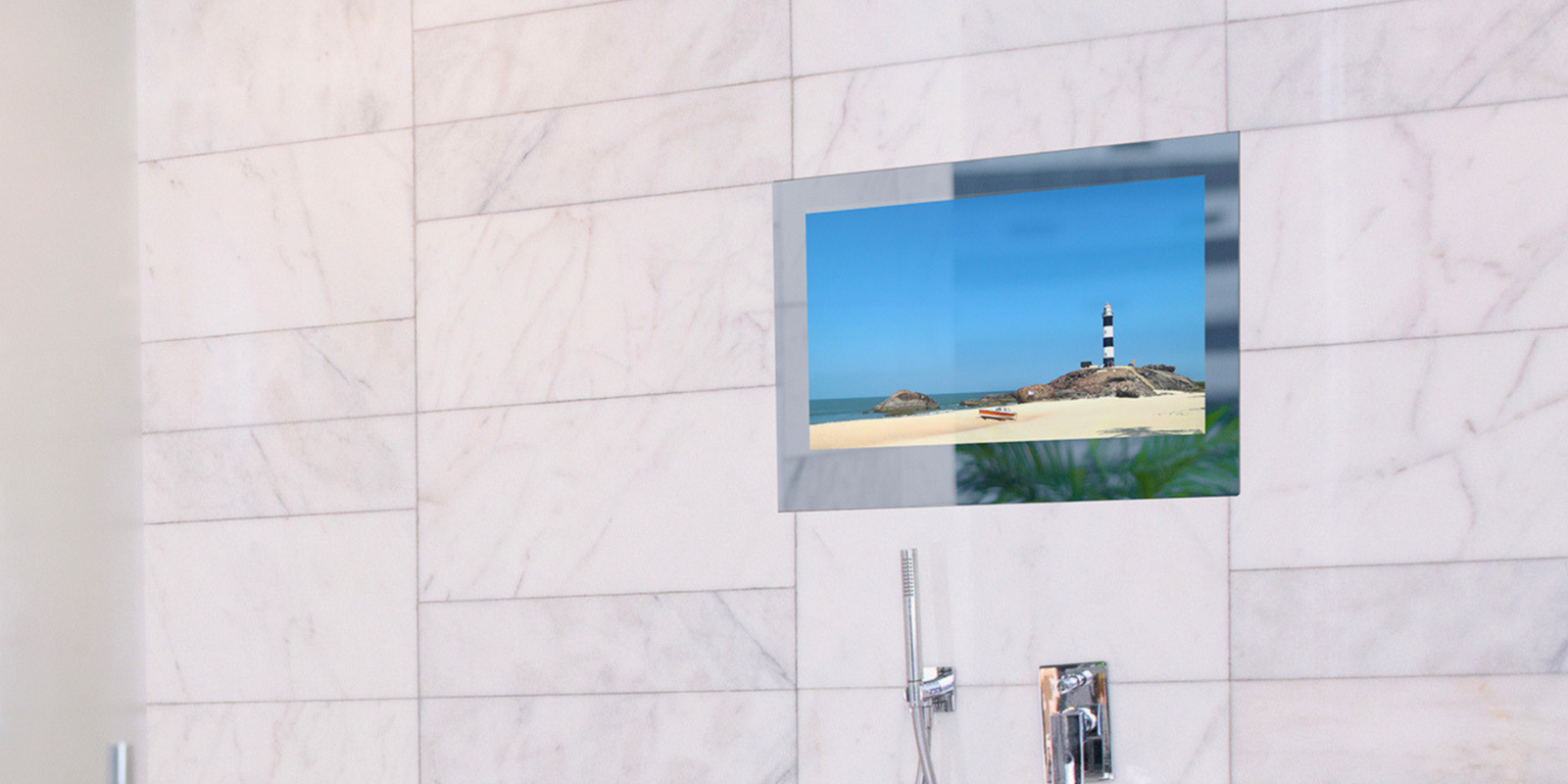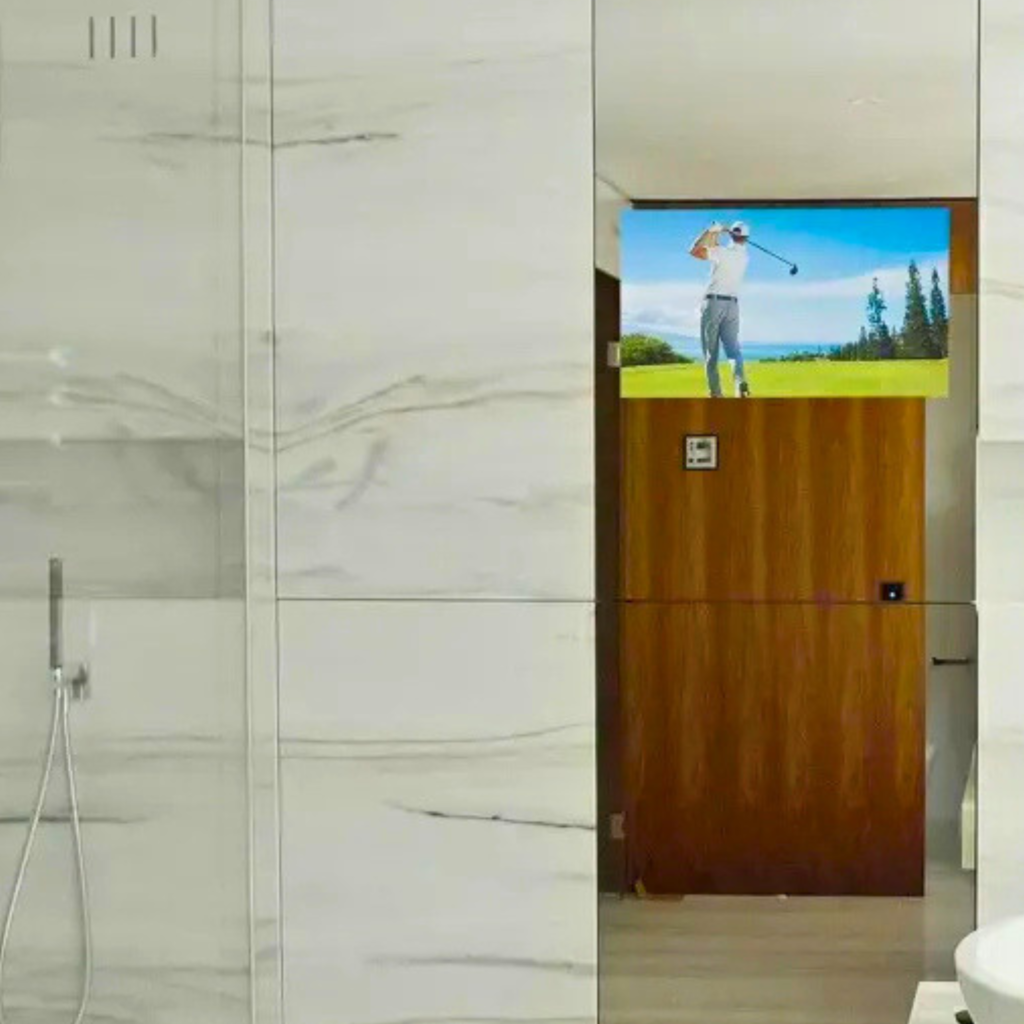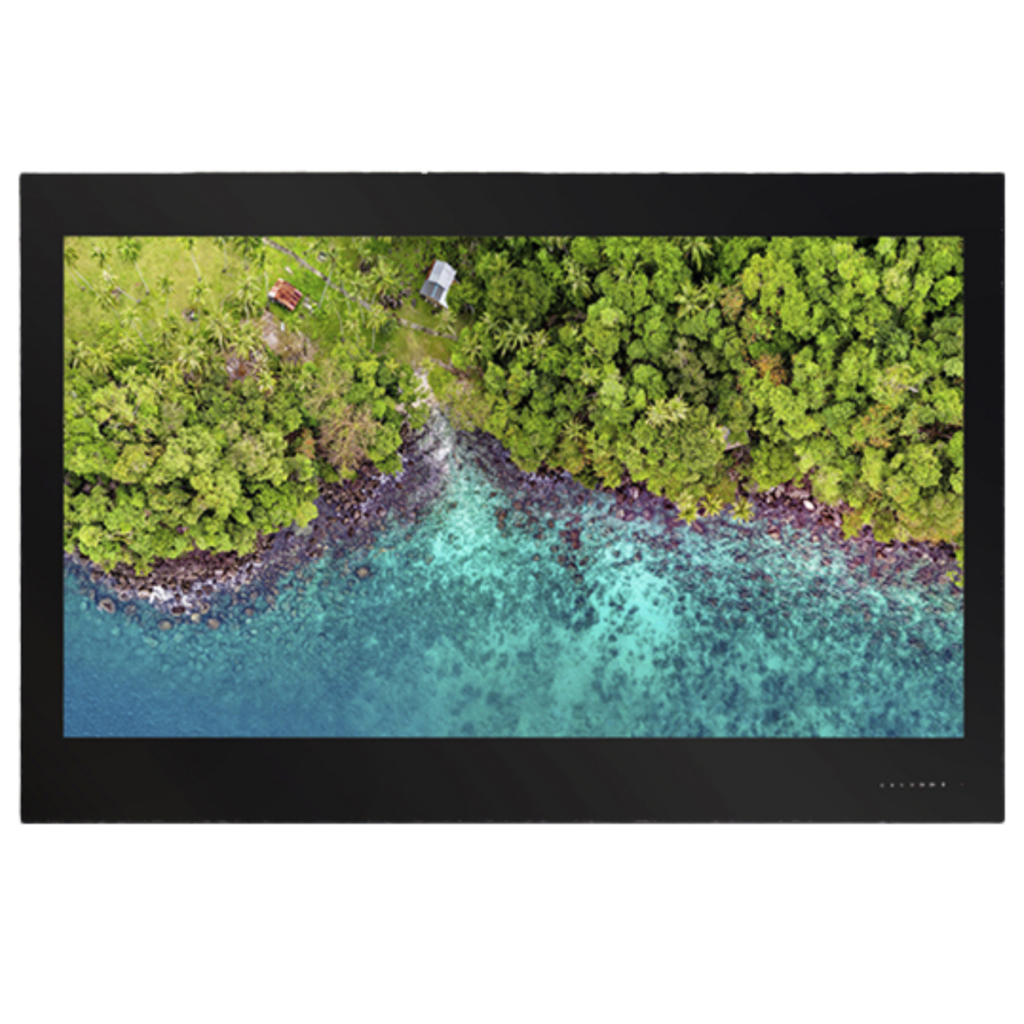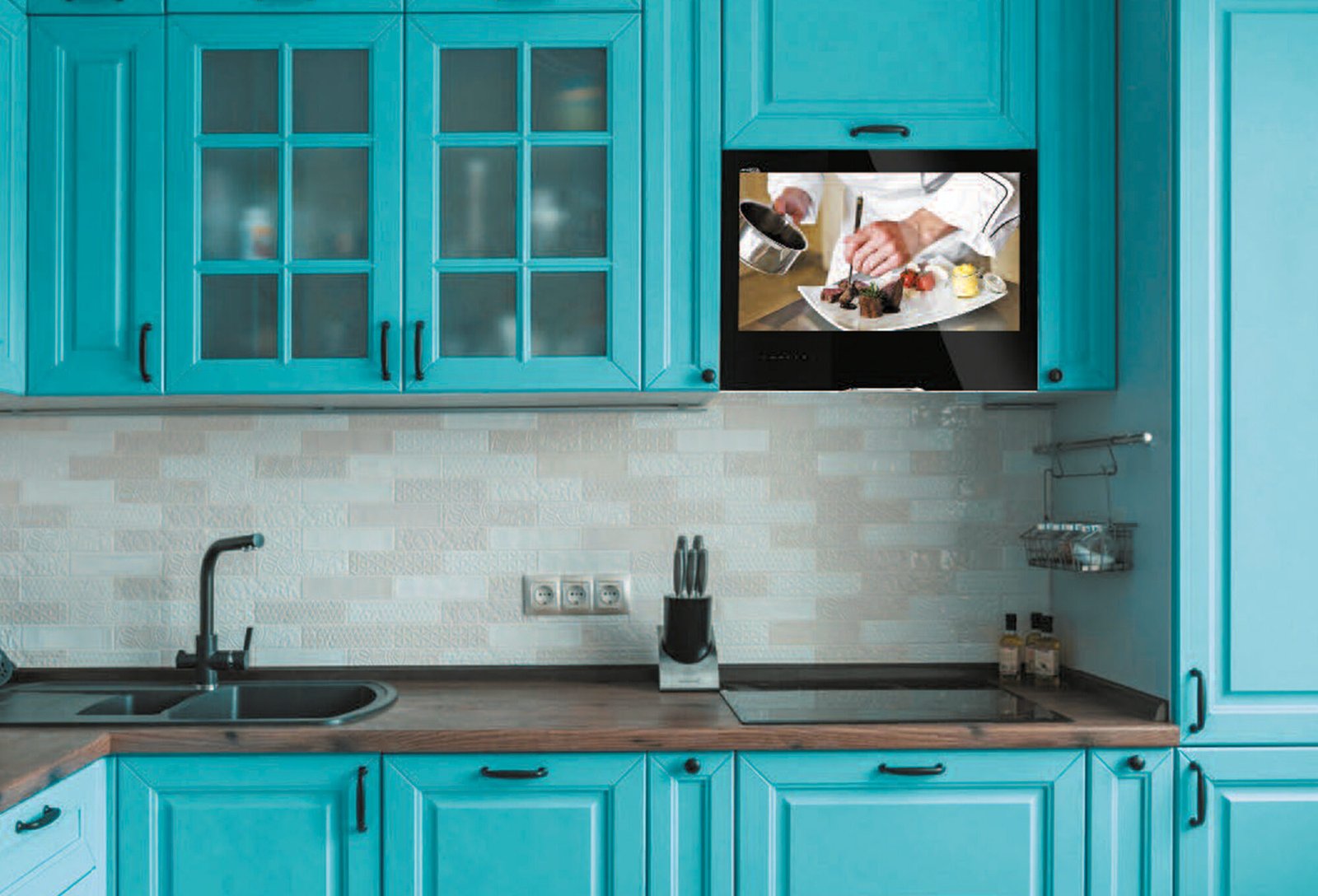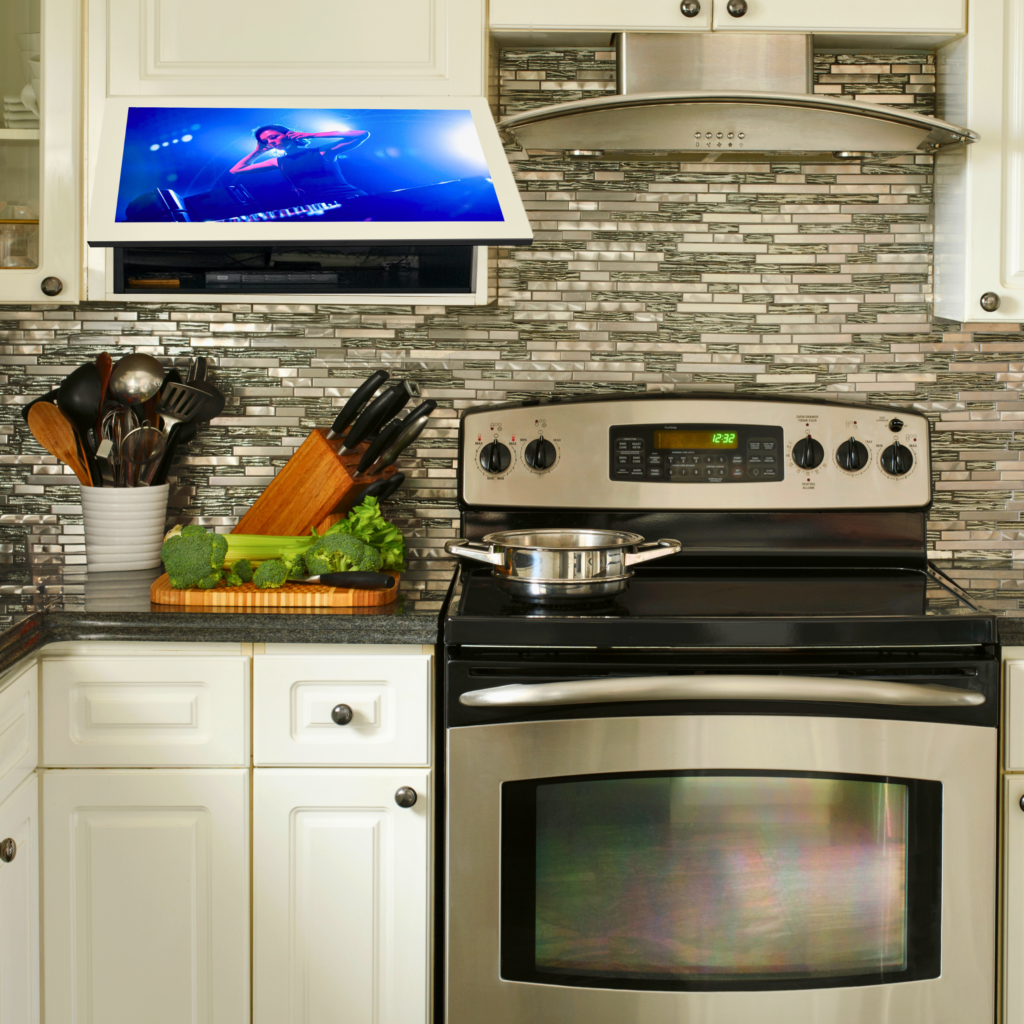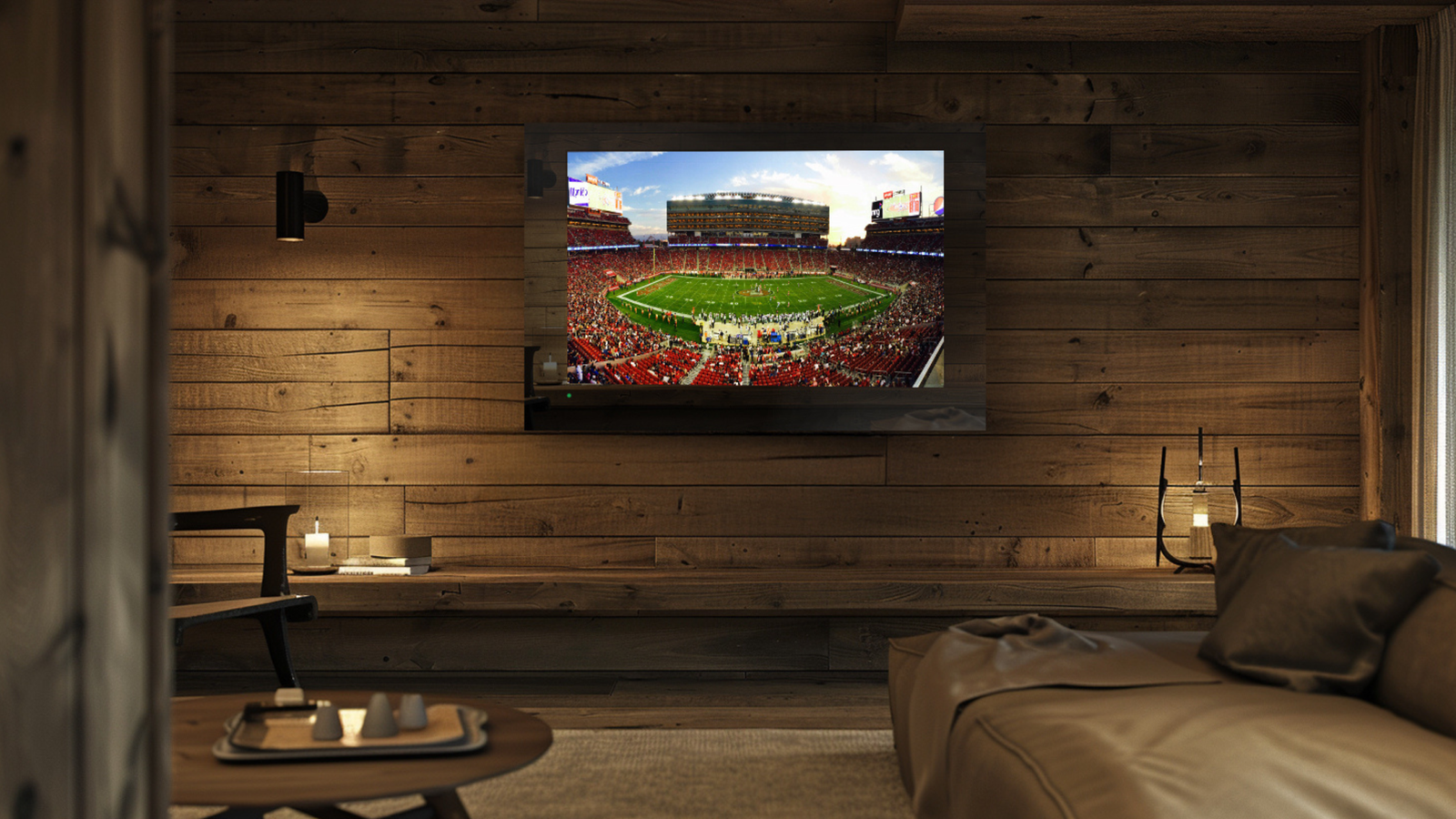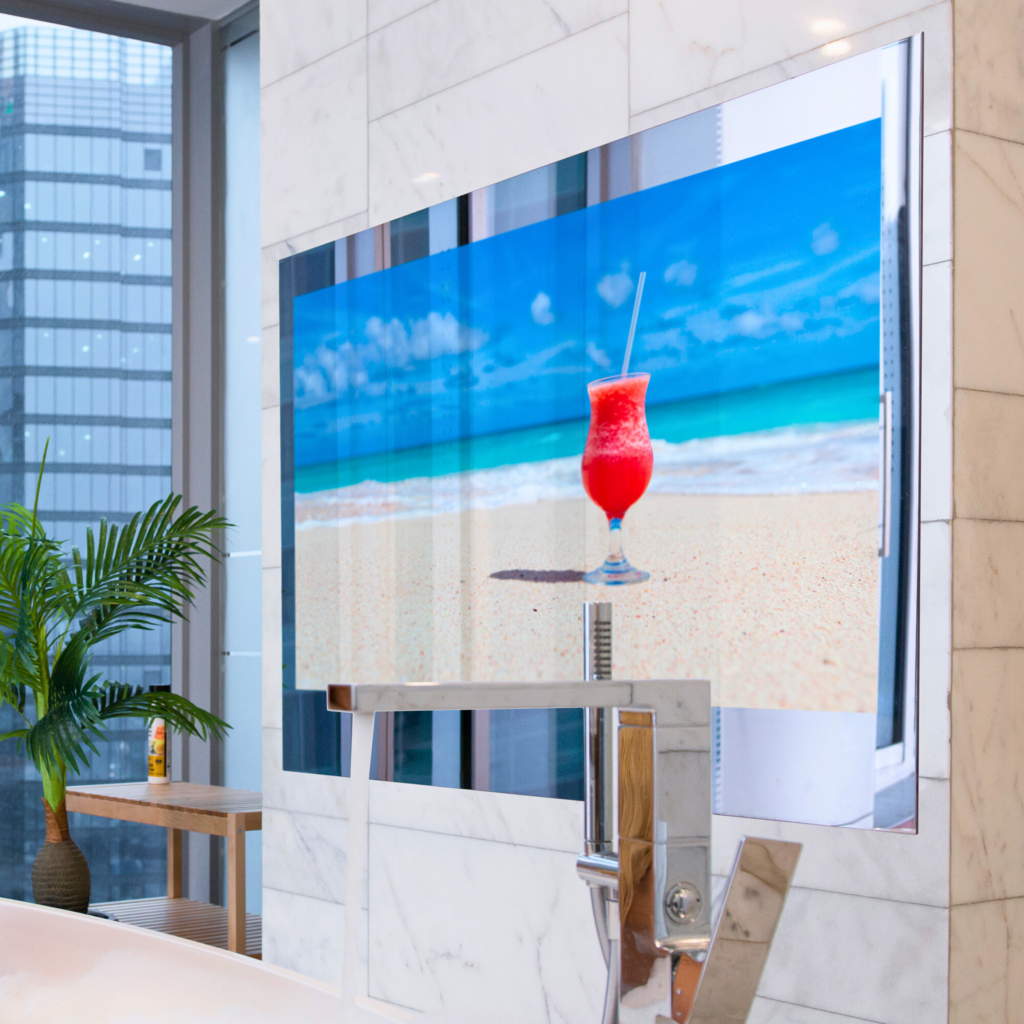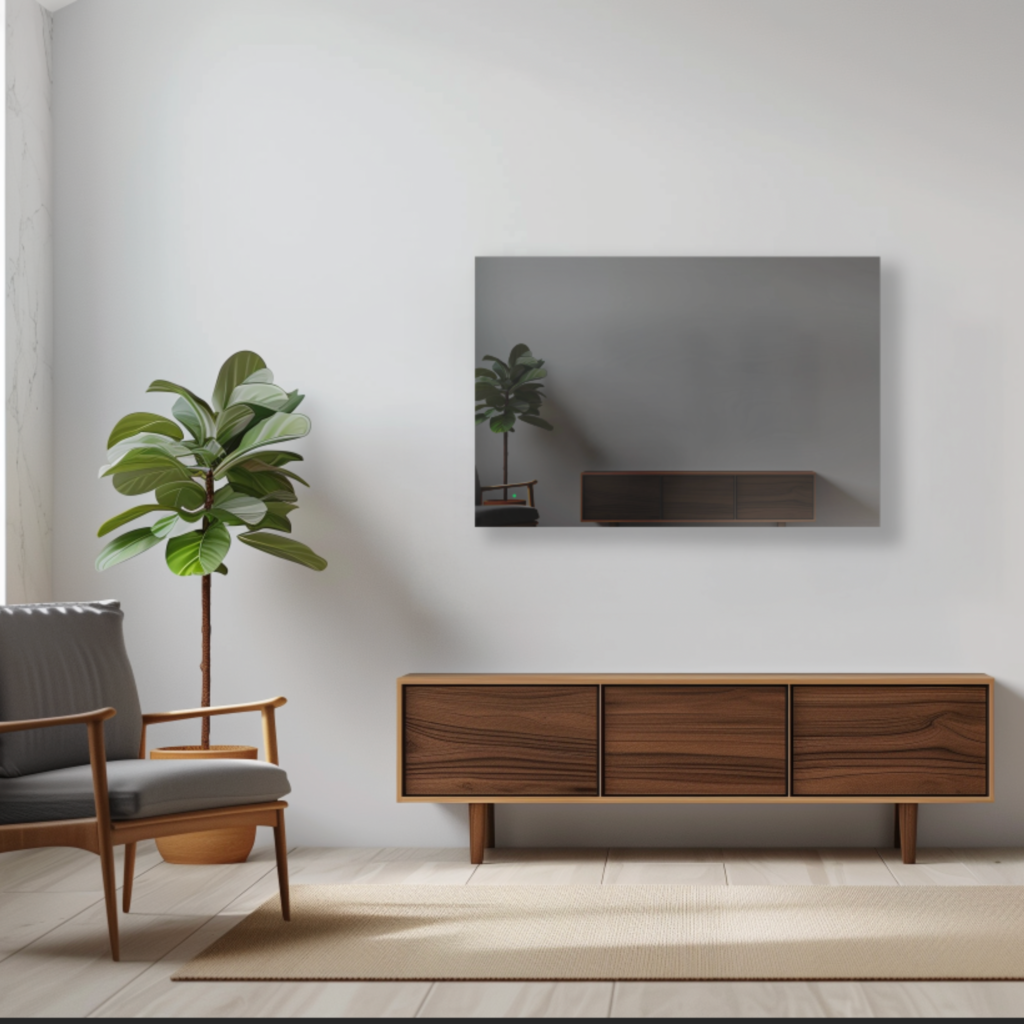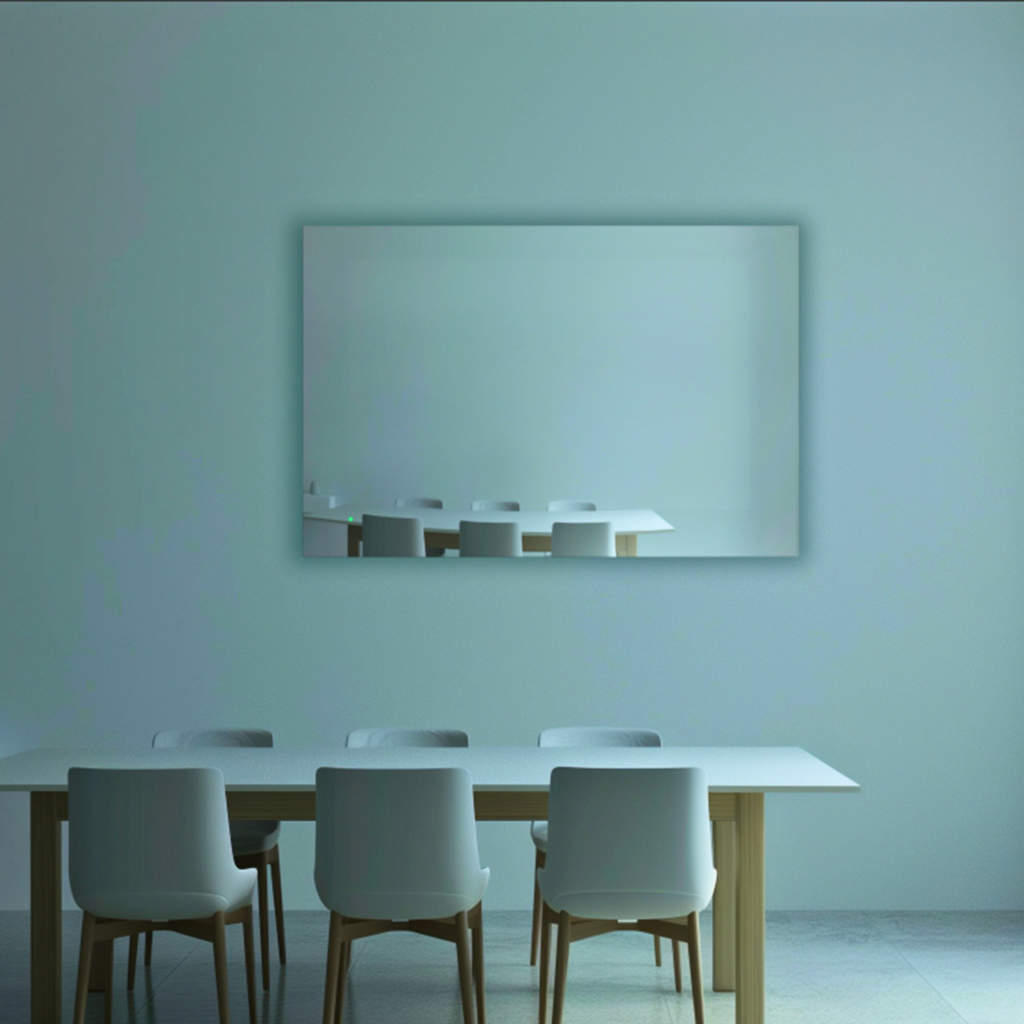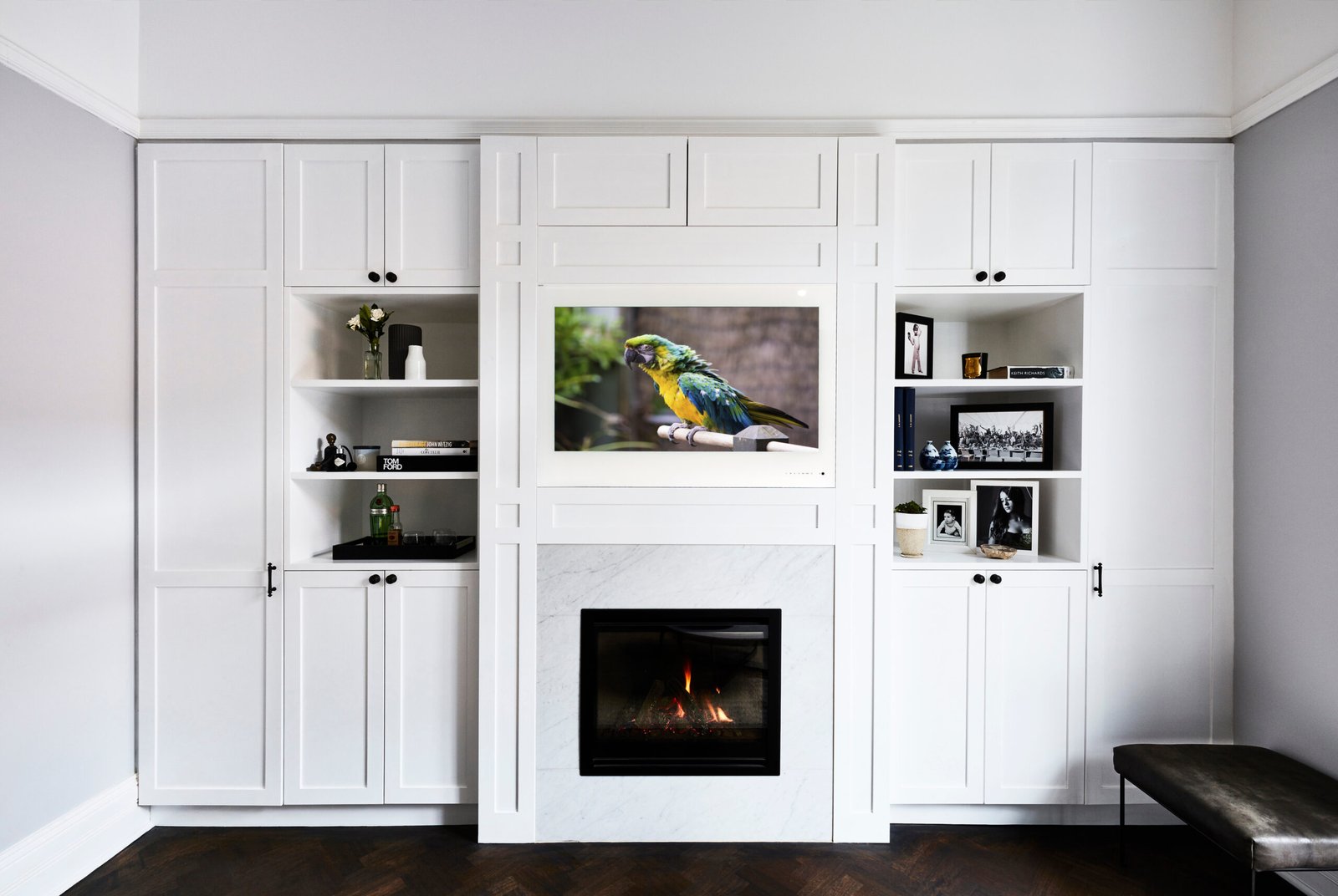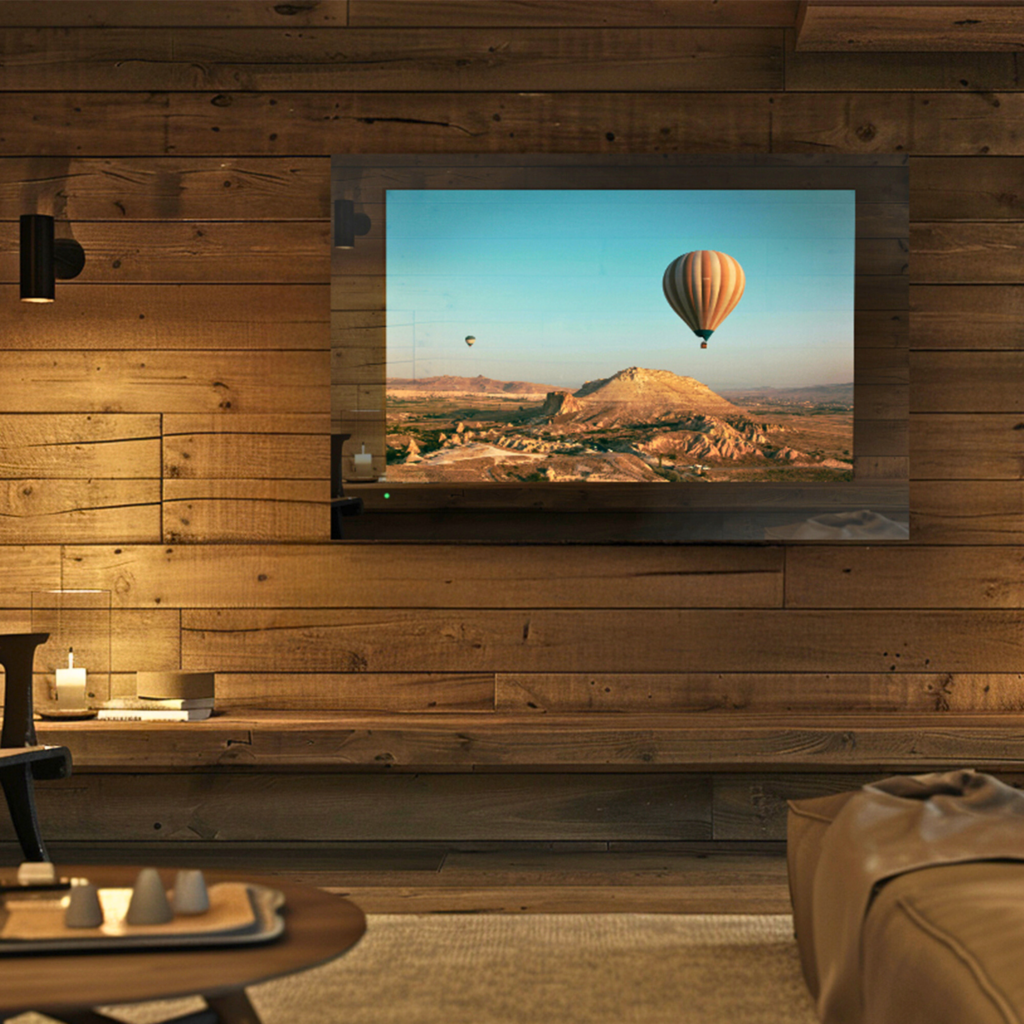
Most rooms in your home can support an in-wall television. If the wall has enough interior depth, a TV can be installed within it, letting the screen sit flush with the surface instead of hanging in front of it. This is a popular, growing trend in modern homes. Who doesn’t want to get rid of that big, ugly, black box hanging on the wall?
But not all in-wall TV options are the same. Here’s what you need to consider when planning a purchase.
A Standard TV in a Wall Box, or an Actual In-Wall TV
It is likely possible to install a TV you already own, or one like it, inside your wall. You can purchase pre-built enclosures, called TV wall boxes, that create a recess in your wall that a standard television can slide right into. It’s a legitimate option if you don’t want to splurge on another new television.
The tradeoff is depth and finish. A standard TV wasn’t designed to sit inside a wall, so the enclosure has to account for the TV’s full depth, its ventilation, and its bezel, which generally requires a lot more interior wall space and depth compared to a TV built for the job.
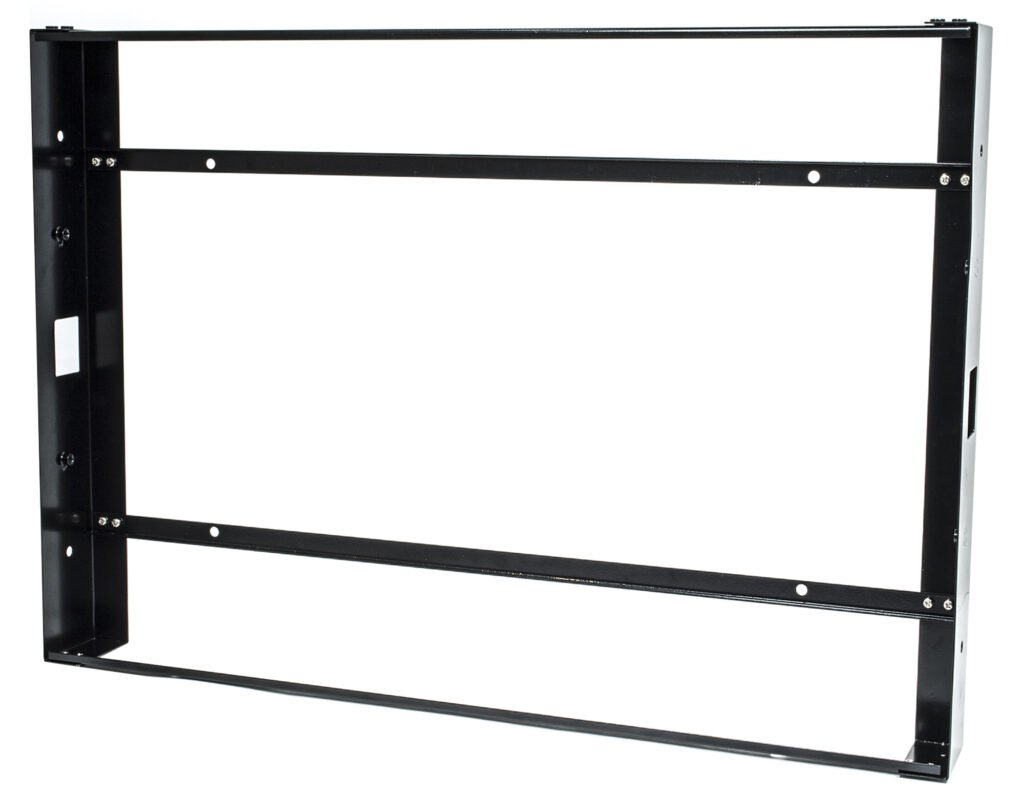
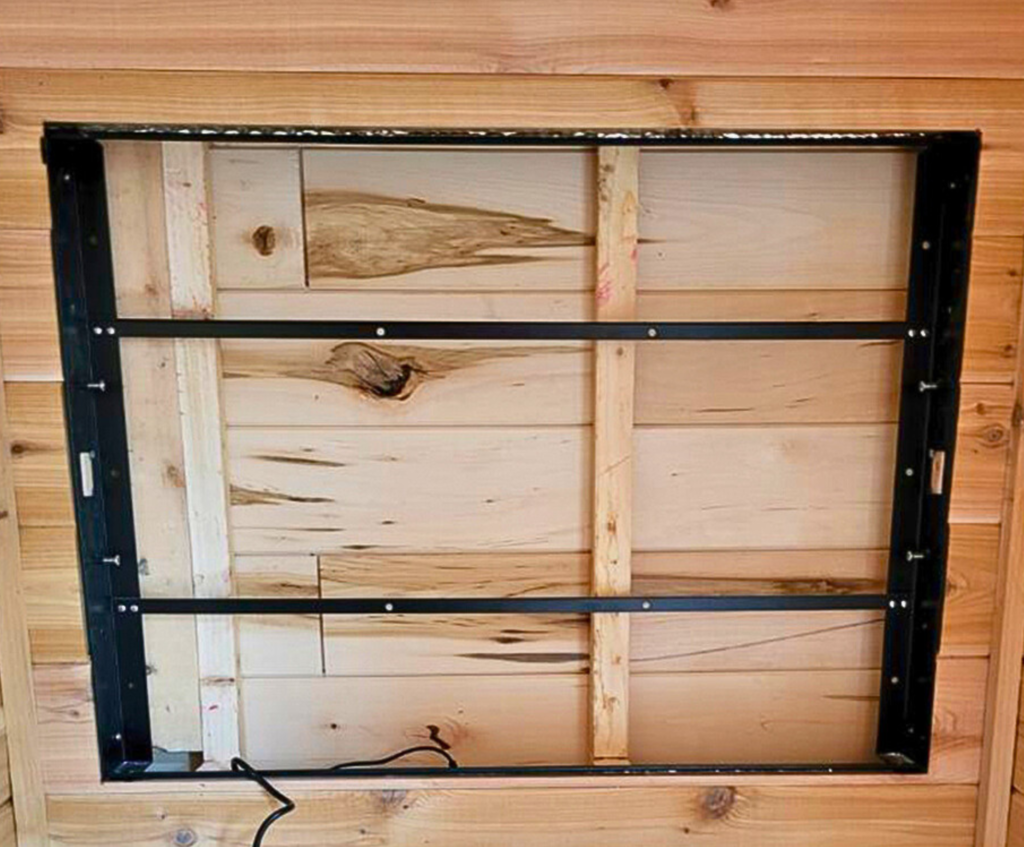
A TV specifically engineered for in-wall installation sits closer to the surface, installed with a framing system custom-made for it. This allows the TV to look more seamless with your wall and requires less interior wall depth. Parallel AV builds this second kind of television.
Does Your Wall Have the Depth?
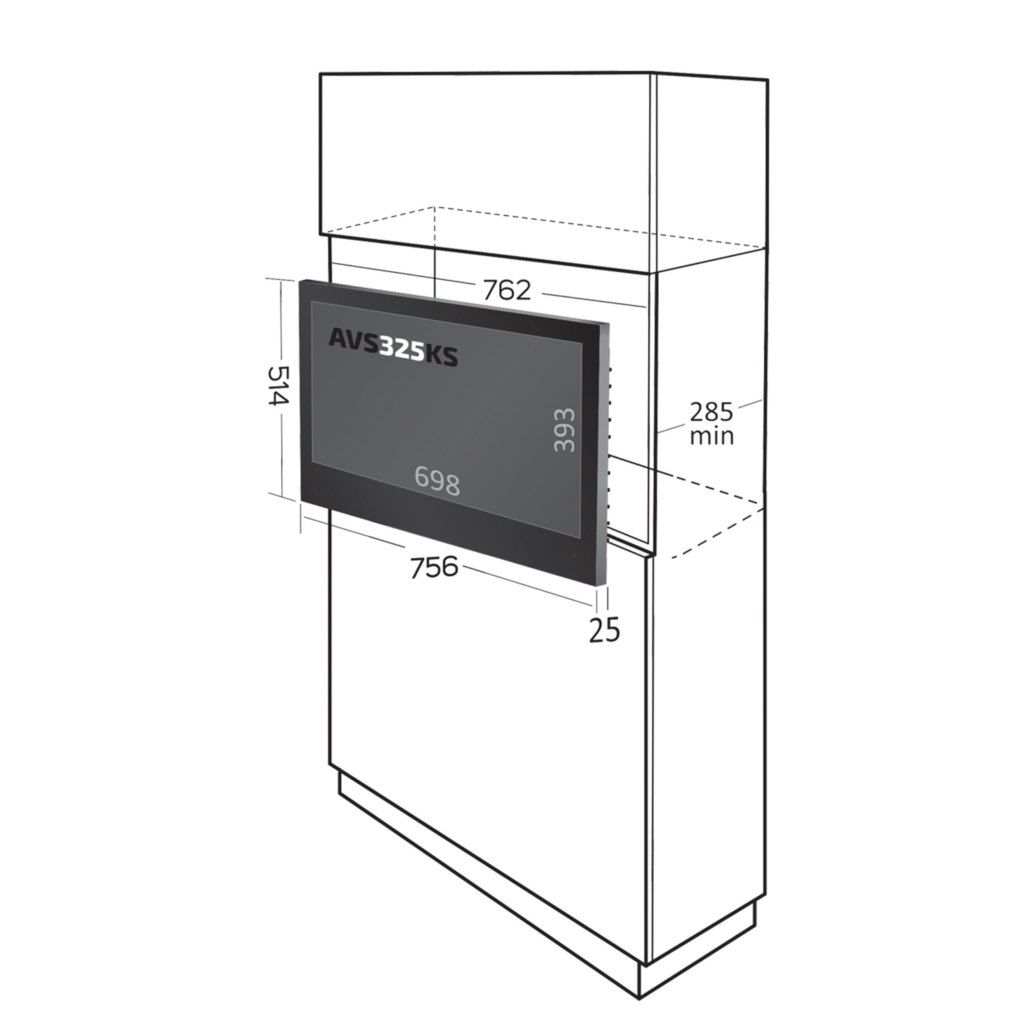
Whichever route you go, the wall itself is the next constraint. In-wall TVs don’t need much depth, generally a few inches depending on the model and size. This breakdown covers our exact depth requirements by size.
If your wall can’t accommodate a recessed install, whether it’s too shallow, structurally off-limits, or just not worth opening up, wall-mounting is still a viable option. Most in-wall TVs, including ours, are also built with standard VESA mounts, so nothing about the TV itself has to change.
What About Power?
A clean, wire-free look means routing power inside the wall rather than running a cord to an exterior outlet. That means you’ll need the ability to run an electric cable behind the wall to power the TV. If nearby cabling doesn’t already exist, an electrician will need to run it.
Our in-wall television installation guide walks through what else you’ll need to check before you start.
Sizing the TV to the Room
Bigger isn’t automatically better here. Ideal television size depends primarily on how far away you’ll be sitting or standing while watching, not how much wall space you have to fill.
This guide breaks down screen size versus viewing distance so you can land on a size that’s actually comfortable to watch. If the distance calls for it, our in-wall televisions go up to 75″.
DIY, or Call a Pro?
Most in-wall installs are manageable for a confident do-it-yourselfer or a handyman-level installer, especially up to around 42″. Past that, the TV gets heavy enough that installing it safely inside a wall is a two-person job at minimum, and often one worth handing to a professional installer rather than attempting alone.
Aesthetics and Finish
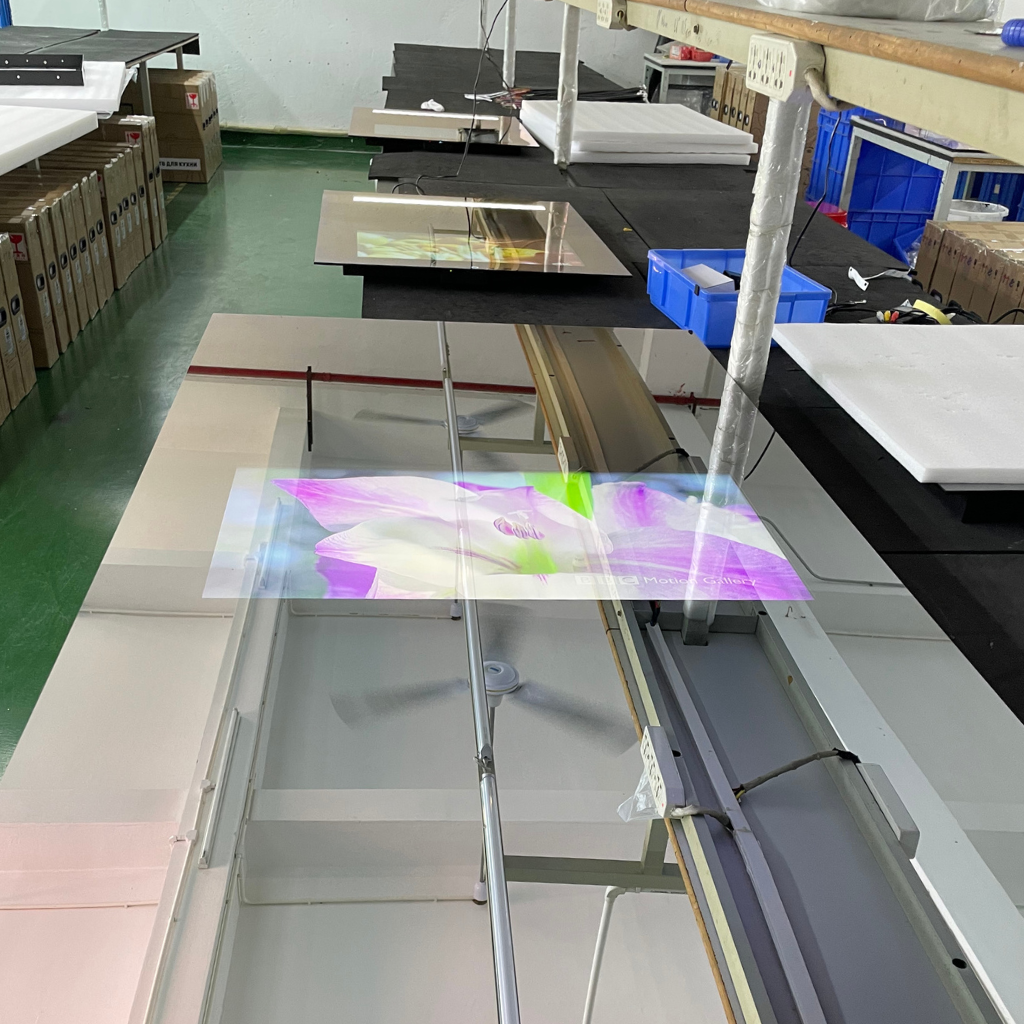
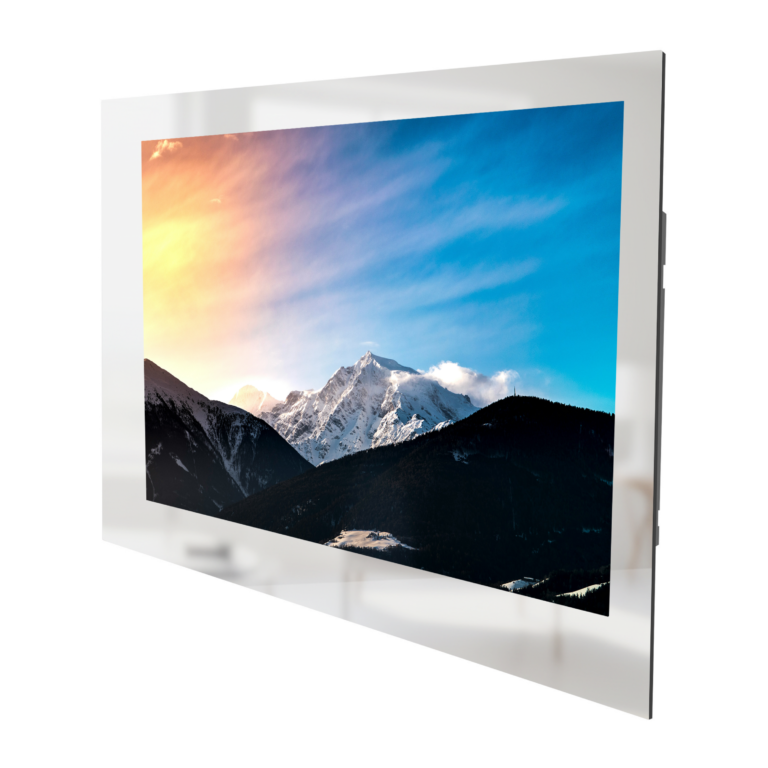
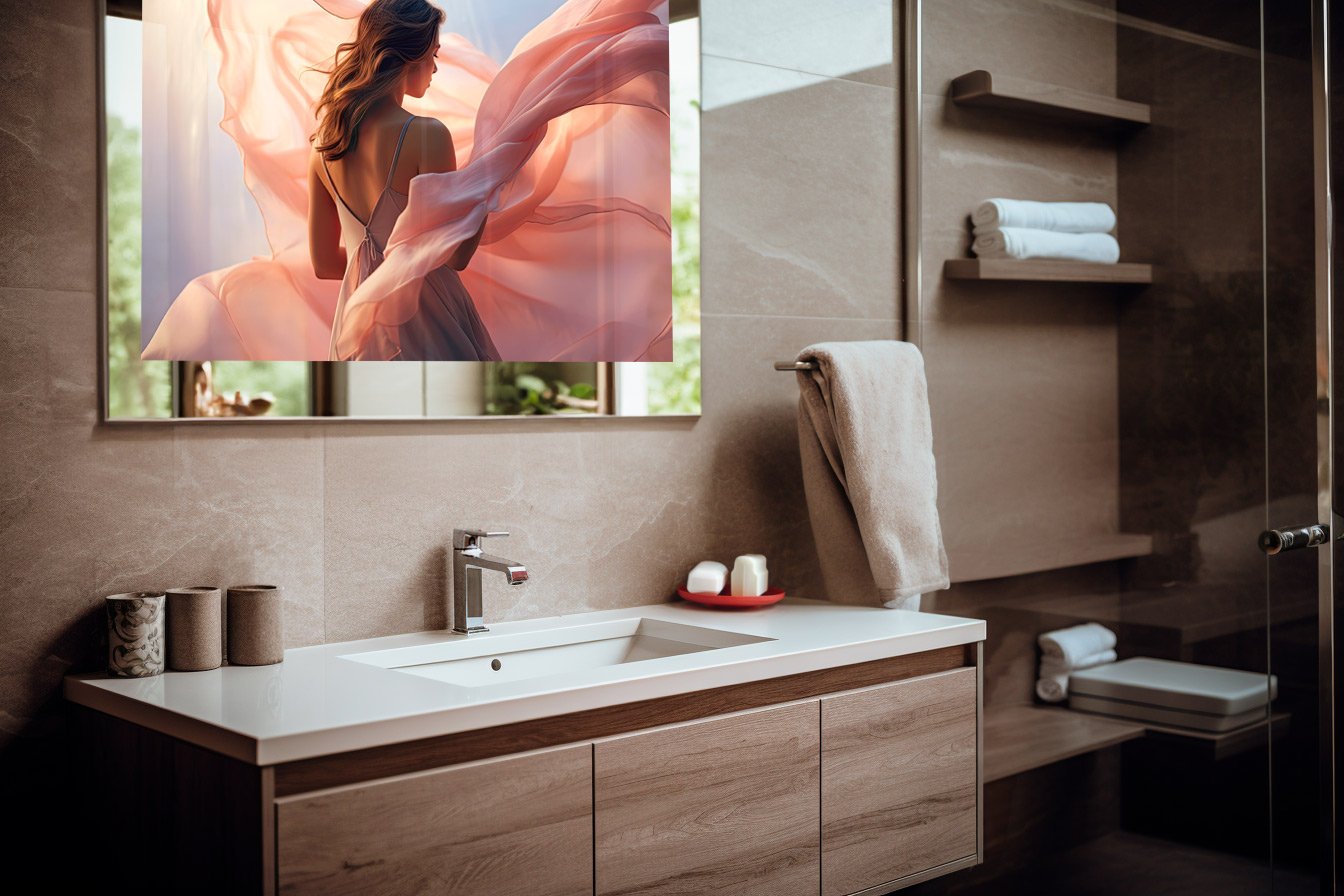
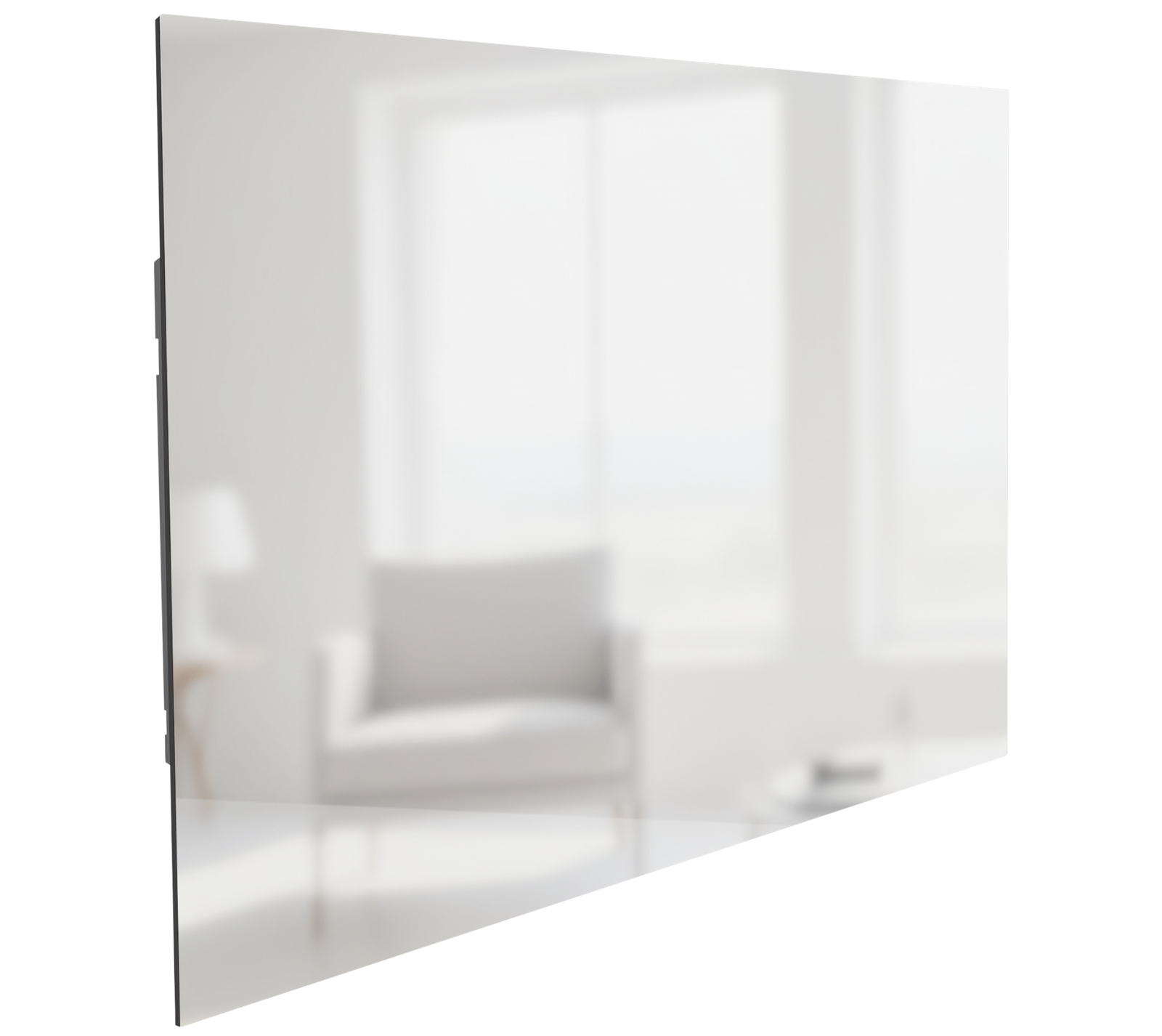
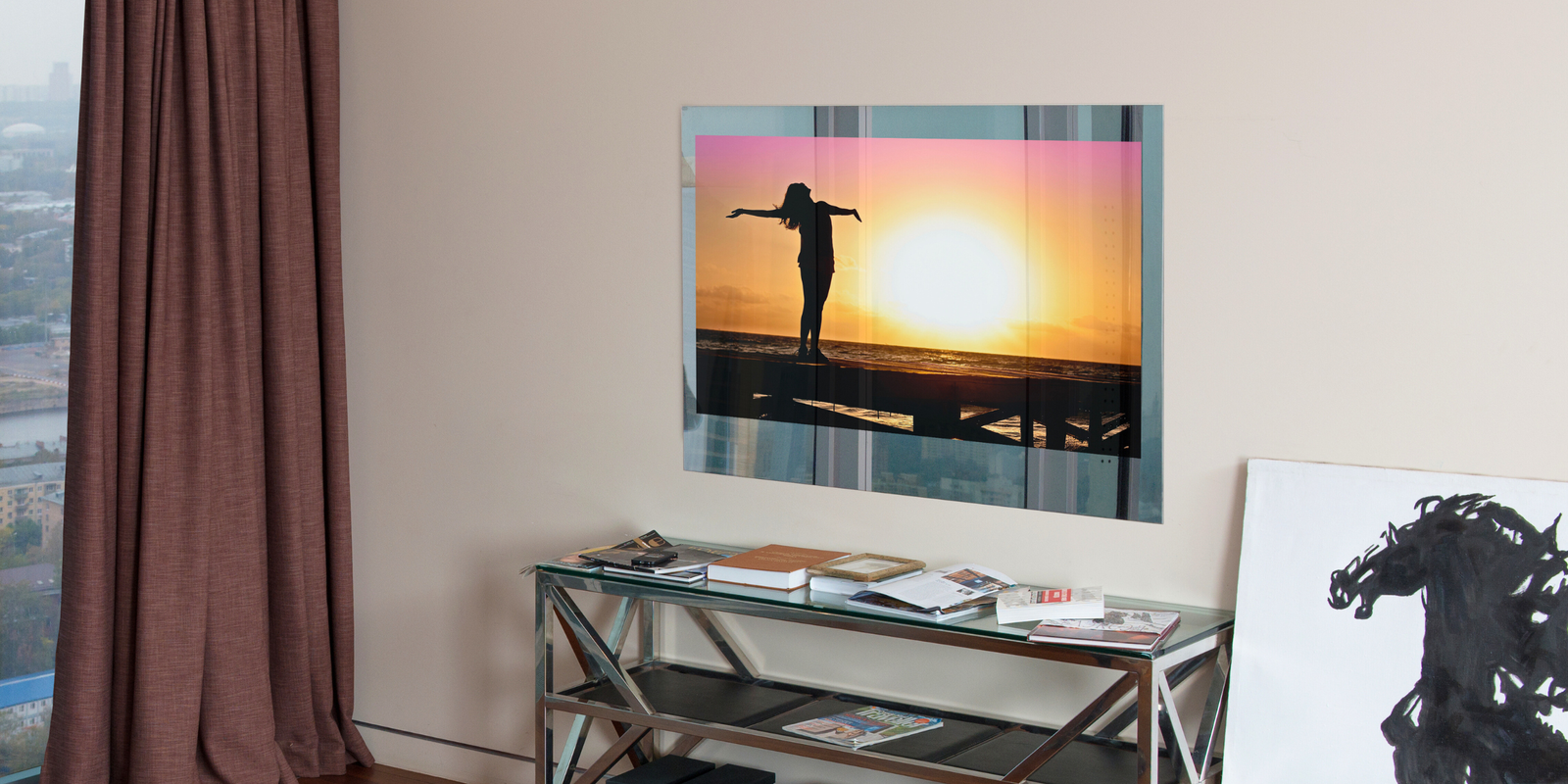
Once the practical questions are settled, you can start thinking about aesthetics. A mirror finish keeps the TV invisible when it’s off, which works well in bedrooms, living rooms, and bathrooms alike. It also naturally opens up and brightens any room and adds a useful mirror to the décor.
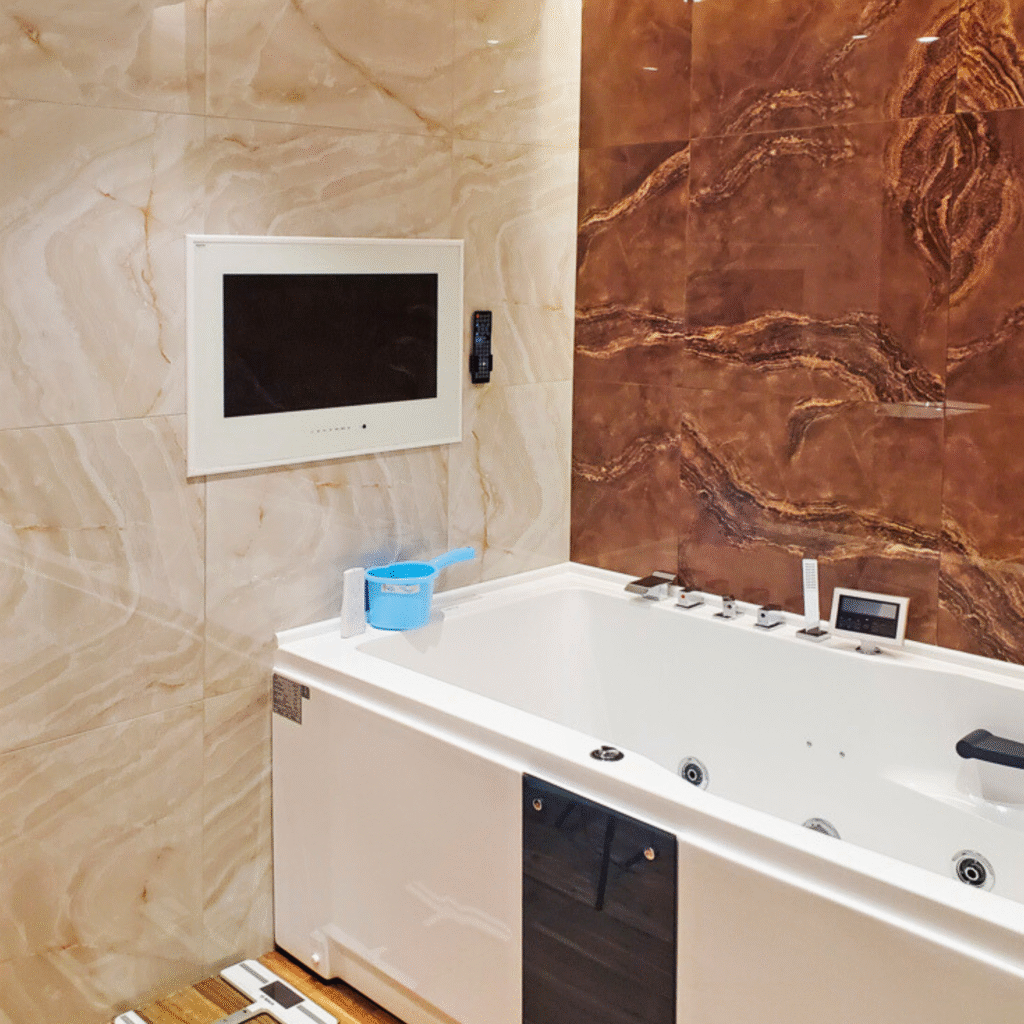
A white or black frame gives the TV a visible but intentional, high-end presence instead of hiding it.
And if you need something different than what’s available out of the box, custom builds exist for exactly that: unusual dimensions, unusual finishes, or a layout that doesn’t fit a standard television. See what’s possible with a custom build.
The Specific Room Matters, Too
With the practical side sorted, the last question is what curveballs any particular room may throw your way.
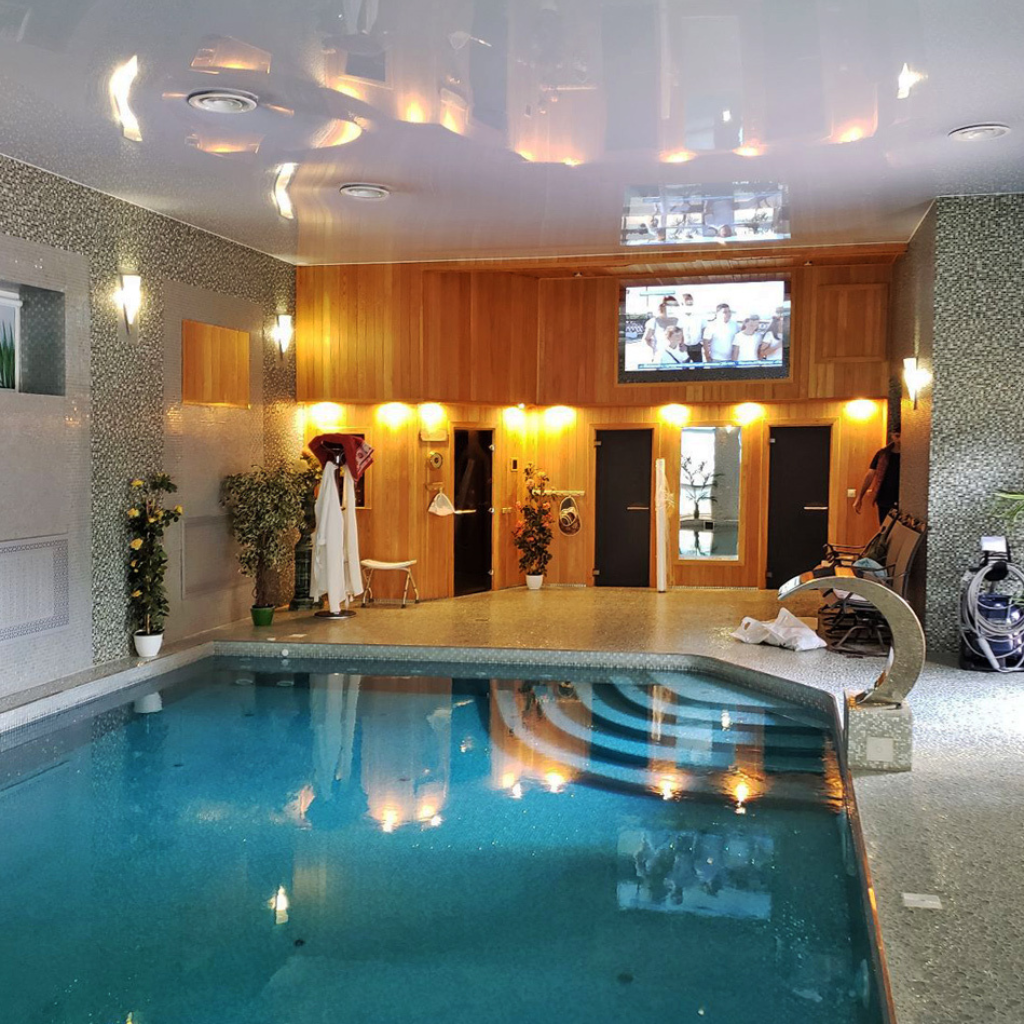
A bathroom, a room with a shower, or a pool room needs moisture protection, since extended humidity and splashing aren’t something standard electronics hold up against. Here’s how to choose a bathroom TV, which covers the protection needed for any high-humidity room.
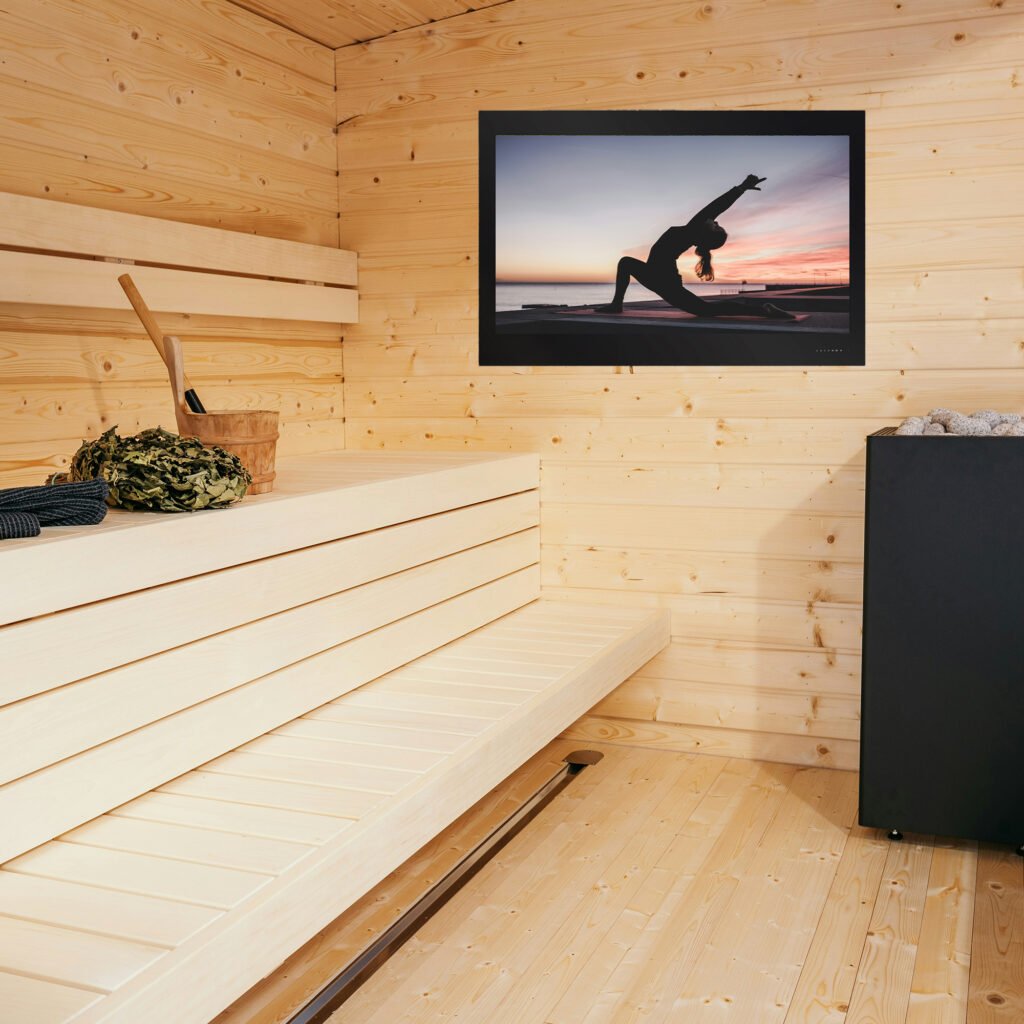
A sauna needs heat protection, and in a traditional steam or wet sauna, moisture protection on top of that. Infrared saunas run drier, so the moisture requirement drops away, but heat protection applies either way. Here’s how to choose a sauna TV.
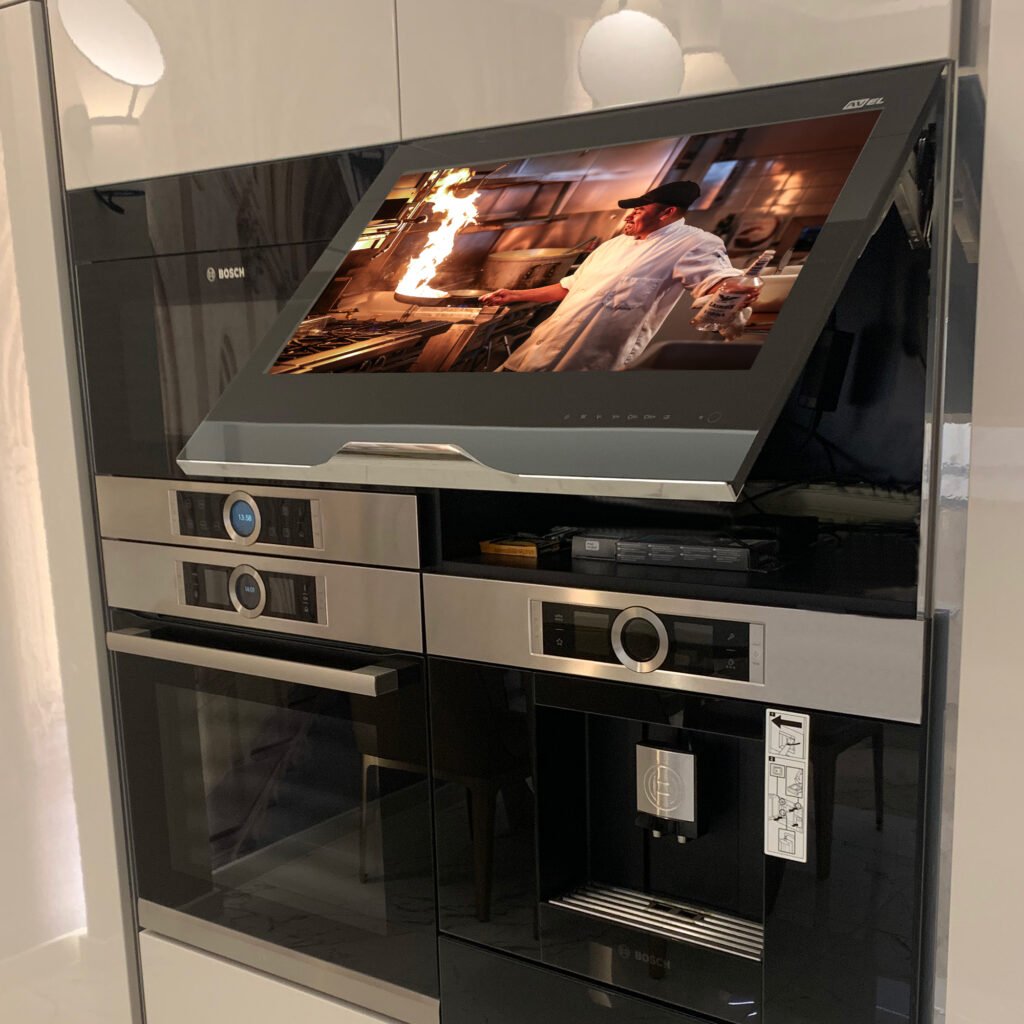
A bedroom, living room, or other everyday living space doesn’t ask anything extra of the TV, so it comes down to whichever finish you’re drawn to. Here’s how to choose a mirror TV for more on that option specifically.
Before You Decide
A quick recap of what to work through before you buy:
- Kind of TV: a standard TV in a wall box, or one built for in-wall installation from the start.
- Wall depth and type: confirmed before anything gets cut into, with wall-mounting as a fallback if it doesn’t check out.
- Power: outlet and cable access at the install location, planned ahead of time.
- Size: matched to viewing distance, not wall space.
- Installer: yourself, a handyman, or a professional, depending on size.
- Finish: mirror, colored frame, or custom.
- Room: whether it needs moisture protection, heat protection, or nothing beyond everyday use.
Parallel AV builds exactly that kind of in-wall TV, across every room this guide covers. Give us a call or send a note if you want to talk through what fits your space.