Philadelphia. Sometime in the early 1960s.
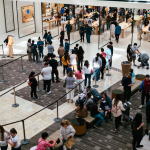
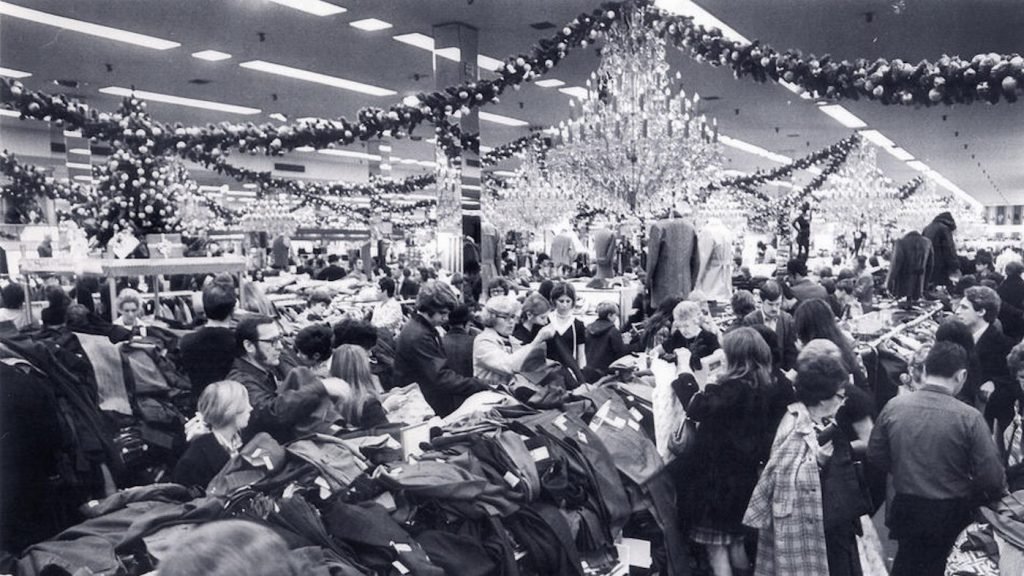
It’s the Friday after Thanksgiving. Schools are closed. Santa Claus has taken his seat for the first time in the downtown department stores. And shoppers pour into Center City to bring their kids to see Santa and to begin their holiday shopping. As the day goes on, out-of-town visitors begin arriving for the Army-Navy football game. It’s the busiest day of the year.
No Philadelphia traffic officer gets the day off. The traffic division is on 12-hour shifts, with even the police band chipping in. It isn’t unusual, for example, to see a trombone player directing traffic. It’s a great day for the retailers of Philadelphia. But it’s a long, long day for police officers.
The police begin calling the day Black Friday. A police reporter for the Philadelphia Evening Bulletin, Joseph Barrett, picks it up and writes it into a front-page story about the snarled traffic. The Evening Bulletin uses it again the next year, and the year after. Then, as Barrett later recalled, television picks it up. Although it doesn’t yet have anything to do with the deep discounts we now associate the day with, at least in Philadelphia, Black Friday is now an annual event. That’s where the history of Black Friday begins.
From Police Slang to Retail Frenzy
The phrase “Black Friday” wasn’t new. The first Black Friday was a financial crash on September 24, 1869, caused by two Wall Street financiers, Jay Gould and Jim Fisk, who tried to corner the gold market. In 1951, a trade magazine used Black Friday for the day after Thanksgiving, the same day as our current Black Friday, but only to complain about workers calling in sick. And then, in the 1960s, Philadelphia police began using it.
But it still took over two decades for Black Friday to expand beyond Philadelphia. What got it over the hump was a better story. By 1981, the Philadelphia Inquirer was reporting that Black Friday was the day retailers’ balance sheets went from red to black, or from losses to profits. Retail historian Michael Lisicky credits Peter Strawbridge, of the Strawbridge & Clothier department store chain, with the idea. Black Friday as we know it was born.
Modest Beginnings
But even as Black Friday was growing beyond Philadelphia, it still wasn’t the biggest shopping day of the year by sales. In the International Council of Shopping Centers rankings of the busiest shopping days, Black Friday placed between fifth and eighth from 1993 to 1999, with the Saturday before Christmas usually on top. For most of the 90s, Black Friday was more of a media event than an actual sales event.
Retailers, however, began to understand that every dime that their customers spent in their stores on Black Friday was a dime they wouldn’t spend with their competitors. They began to offer more aggressive Black Friday discounts and began partnering more closely with their suppliers to drive discounts even further.
Doorbusters, Camp-Outs and Chaos
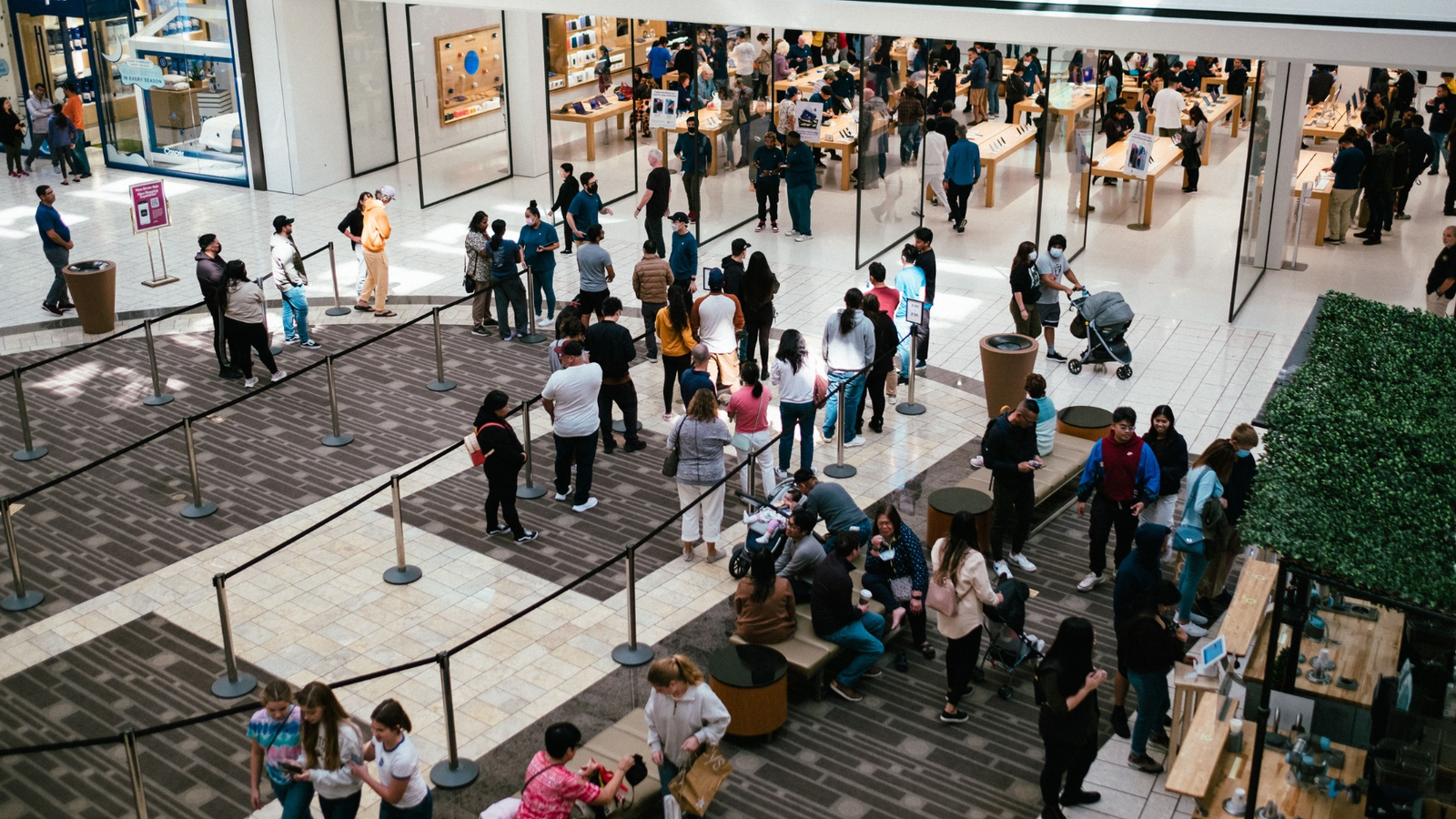
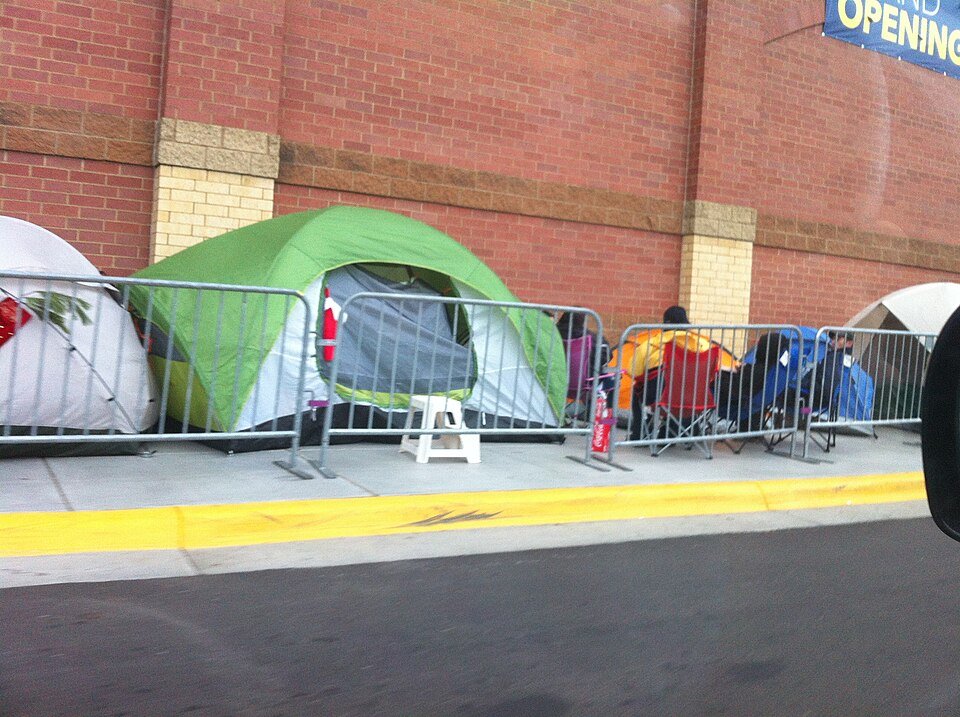
By the early 2000s, Black Friday had taken on the iconic shape we still recognize today: deep, targeted discounts called doorbusters, lines around the block, and stores opening earlier and earlier each year. By the late 2000s, many retailers opened before sunrise, with shoppers camped out to be first through the door. At a Walmart in Fairfax, Virginia, in 2008, one such camper told CNN, “We skipped Thanksgiving dinner.”
Then the competition moved into Thanksgiving itself. Walmart, Target, Best Buy and Kohl’s began opening on Thanksgiving Day, which turned the holiday into a retail race and turned the Black Friday savings into a multiday event.
By then, Black Friday was a fixture of pop culture, too. Horror films used it as a setting, including a 2021 comedy simply called Black Friday, and the 2023 slasher flick, Thanksgiving, opens with a chaotic Black Friday shopping scene.
A Massive Influence on Retail and Manufacturing
The stakes for retailers and suppliers were real. Holiday sales in November and December average about 19 percent of annual retail sales, according to the NRF, and more for some retailers and industries, such as toys and electronics. The NRF also notes that holiday sales can be more profitable, because higher volumes come without significant increases in fixed costs. Large retailers often plan their holiday strategy more than a year ahead, and suppliers lock in raw-material orders and production timelines months before the first sale.
Black Friday discounts and volume eventually got big enough that manufacturers and retailers began planning their prices for the whole year with November discounts in mind. In a sense, a portion of the regular retail prices you pay throughout the year help fund Black Friday discounts. This pattern shows up in TVs, which follow a fairly predictable price cycle, according to the review site RTINGS, with the holiday sales as one of its regular lows.
The pressure also led some manufacturers to make products just for Black Friday, called “derivative” models. Sometimes the maker gives an existing product a new model number. Other times it makes changes to afford a lower price, such as a TV with one fewer HDMI input or lower-cost parts. Because the model exists only for the sale, there’s no price history and no identical model at another store, which makes the discount look bigger and price comparisons harder. It also gets around retailers’ price-match guarantees, which usually apply only to the exact same model.
Cyber Monday and the Month-Long Sale
In 2005, the NRF noticed a jump in online sales the Monday after Thanksgiving and gave it a new name: Cyber Monday.
As shopping moved online, Black Friday sales stretched to span the days between Black Friday and Cyber Monday. The five-day weekend that ran from Thanksgiving through Cyber Monday became a week, and then weeks. In 2020, major retailers closed on Thanksgiving and spread their deals across the whole month. Many “Black Friday” sales now start in early November, and some in late October, which is why experts now call the month “Black November.” The one-day urgency that once made people line up in the dark has faded as the sales have stretched over weeks, but Black Friday’s impact on consumers, retailers and manufacturers endures.
Still, Not Everyone Participates in Black Friday
Black Friday became so big, and so polarizing, that skipping it can be a statement. In 2015, REI closed all of its stores on Black Friday and paid its employees to spend the day outside. It made the closure permanent in 2022.
Luxury brands sit it out for a different reason. In 2018, Glossy reported that of the five most popular luxury brands ranked by Luxe Digital (Gucci, Chanel, Louis Vuitton, Hermès and Rolex), none offered Black Friday deals through their own stores. ESSEC professor Sonja Prokopec explains why: a truly iconic product drives desire for the whole brand, so once it looks accessible, the whole brand seems less exclusive. As the fashion saying goes, “Gucci don’t go on sale.”
Skipping Black Friday also changes the math described above. A brand that doesn’t discount in November doesn’t have to inflate its prices earlier in the year to offset that discount. Parallel AV doesn’t take part in Black Friday, so we have no November sale to make up for. The price you pay in March isn’t padded to cover it. We stand by our prices year round.
Further Reading
- HISTORY: What’s the Real History of Black Friday?
- Snopes: Black Friday, including Joseph Barrett’s recollection of the early 1960s
- Snopes: Is Black Friday the Biggest Shopping Day of the Year?, with the shopping-center rankings
- GBH: How Black Friday Got Its Name
- NBC News: The Evolution of Black Friday
- NBC News: “Derivative” TVs, a Smoking Deal or a Sham?
- CNN: Black Friday turns tragic for Wal-Mart
- NRF: Winter Holiday FAQs
- RTINGS: When To Buy A TV
- Glossy: Black Friday gave a boost to mass fashion brands, while luxury and streetwear sat out
- ESSEC Knowledge: Luxury for less?
- REI: The History of #OptOutside