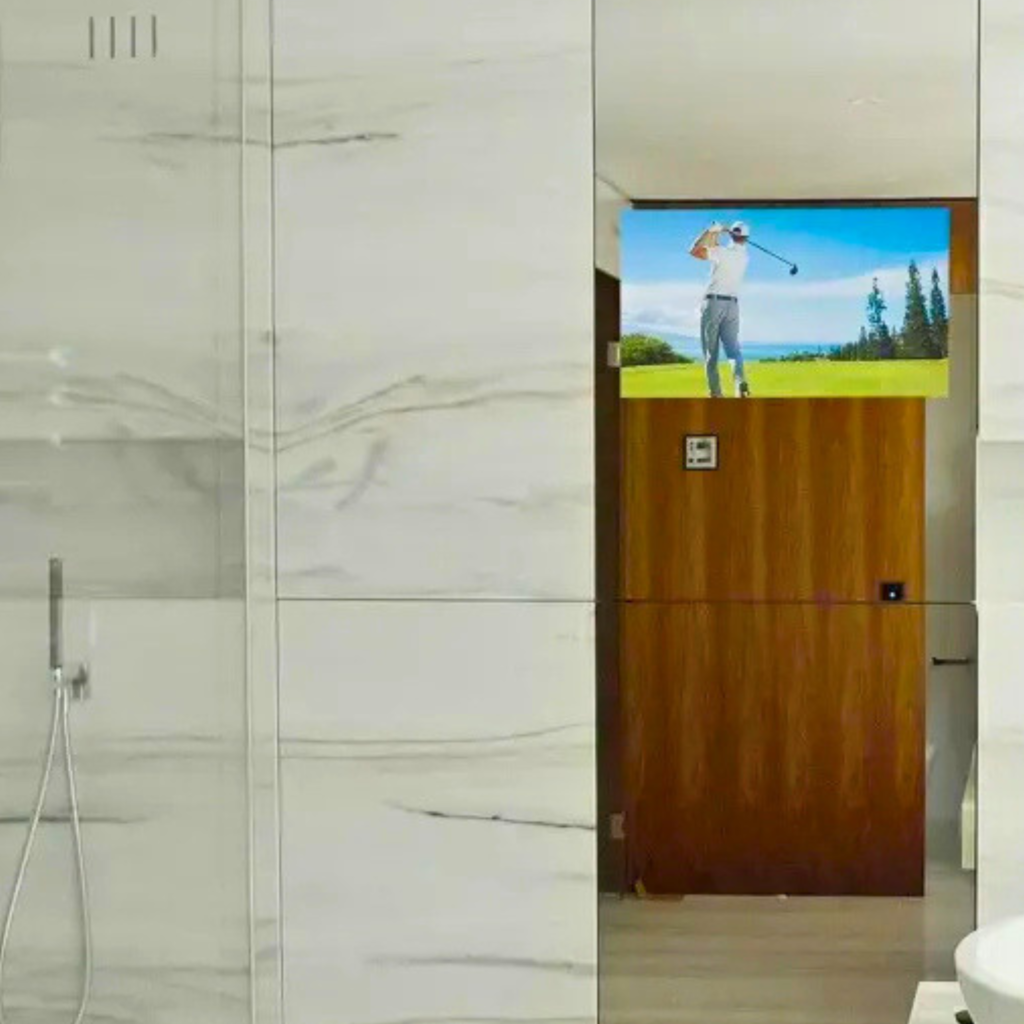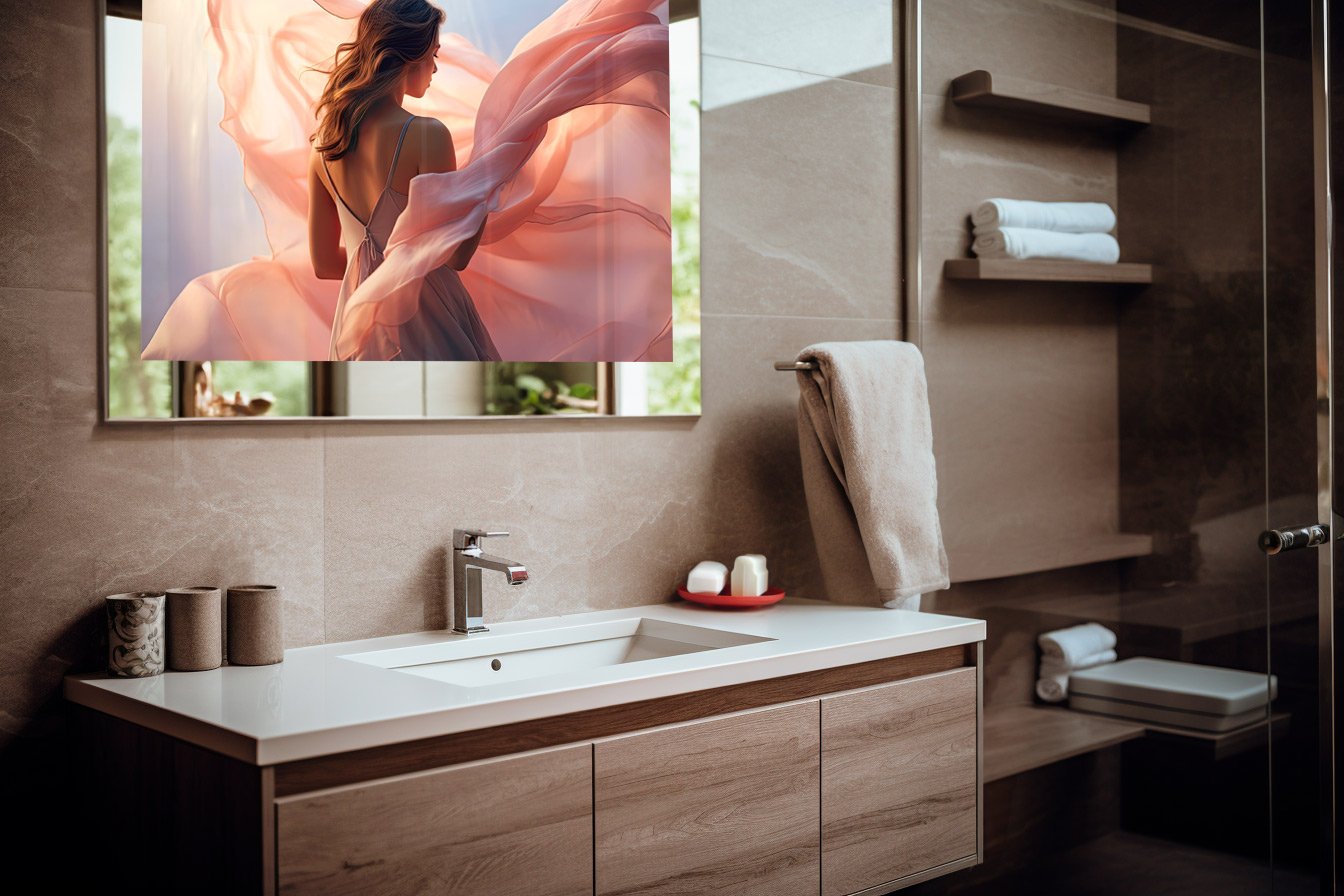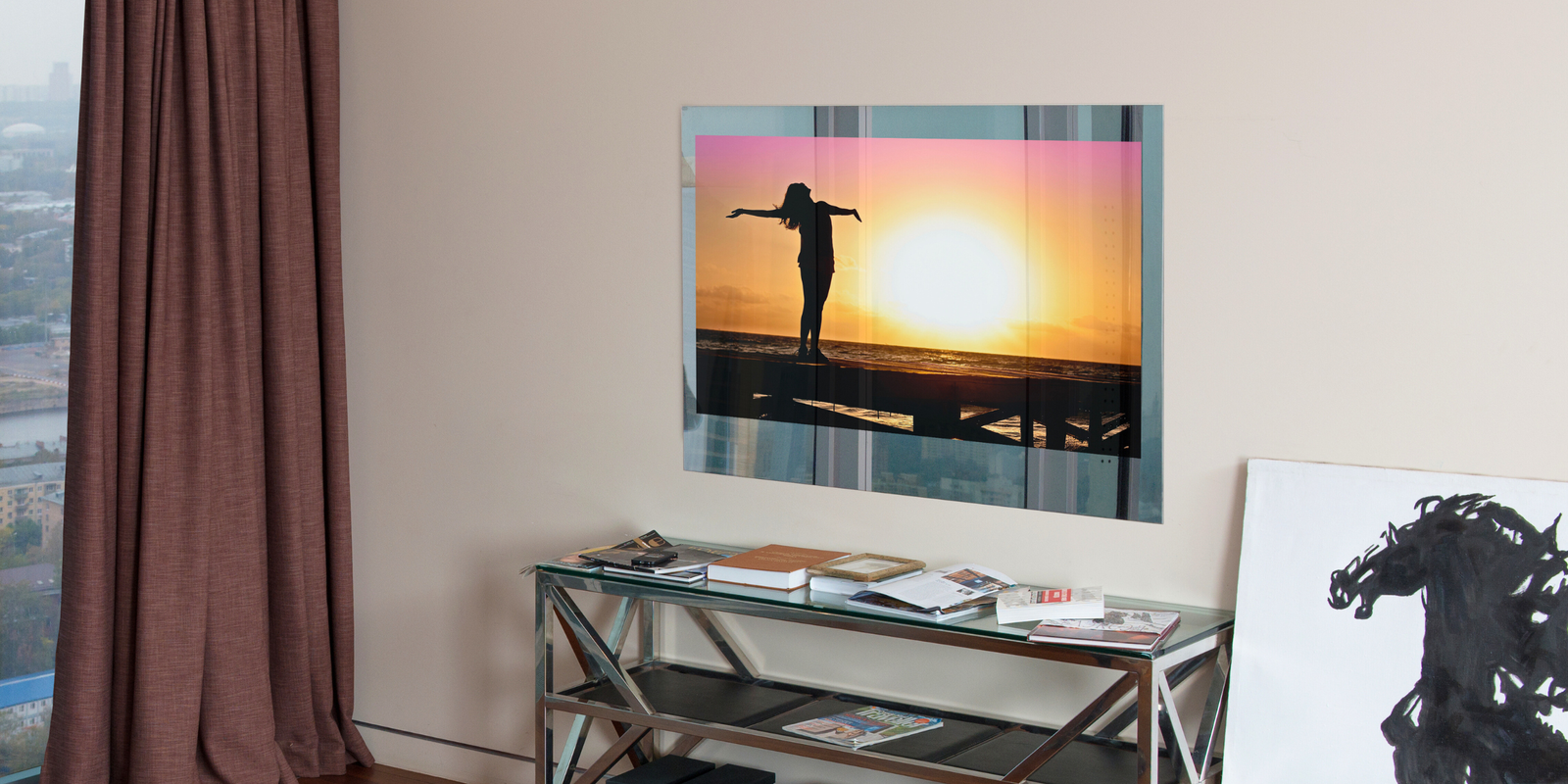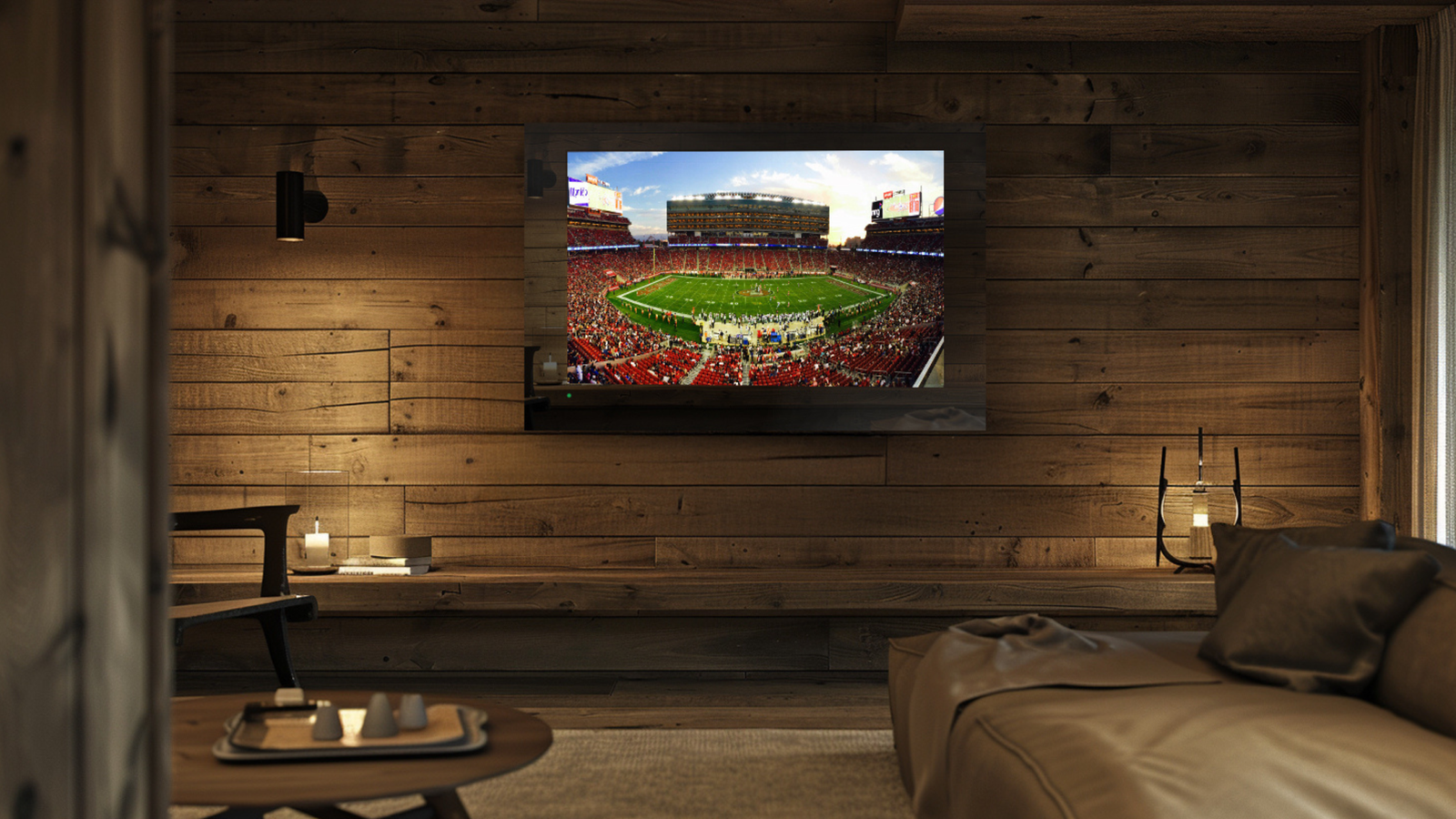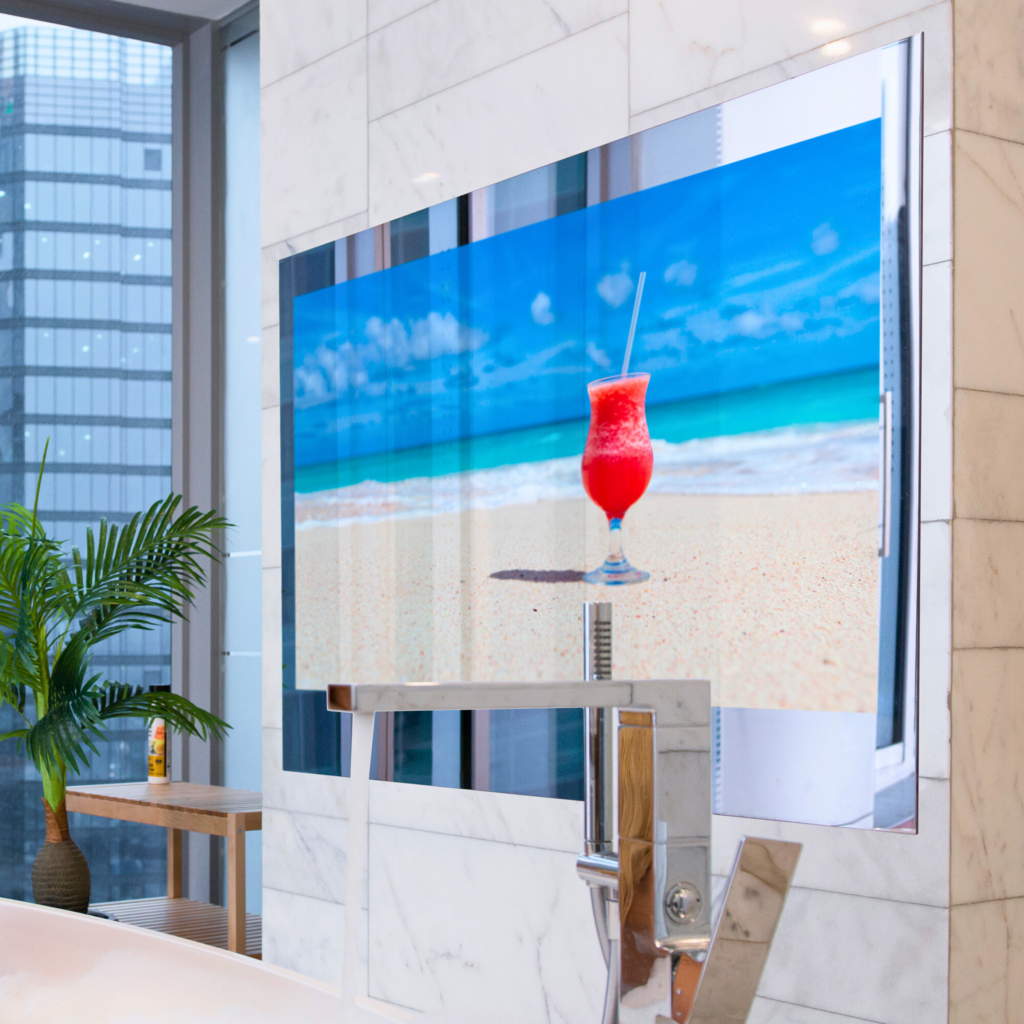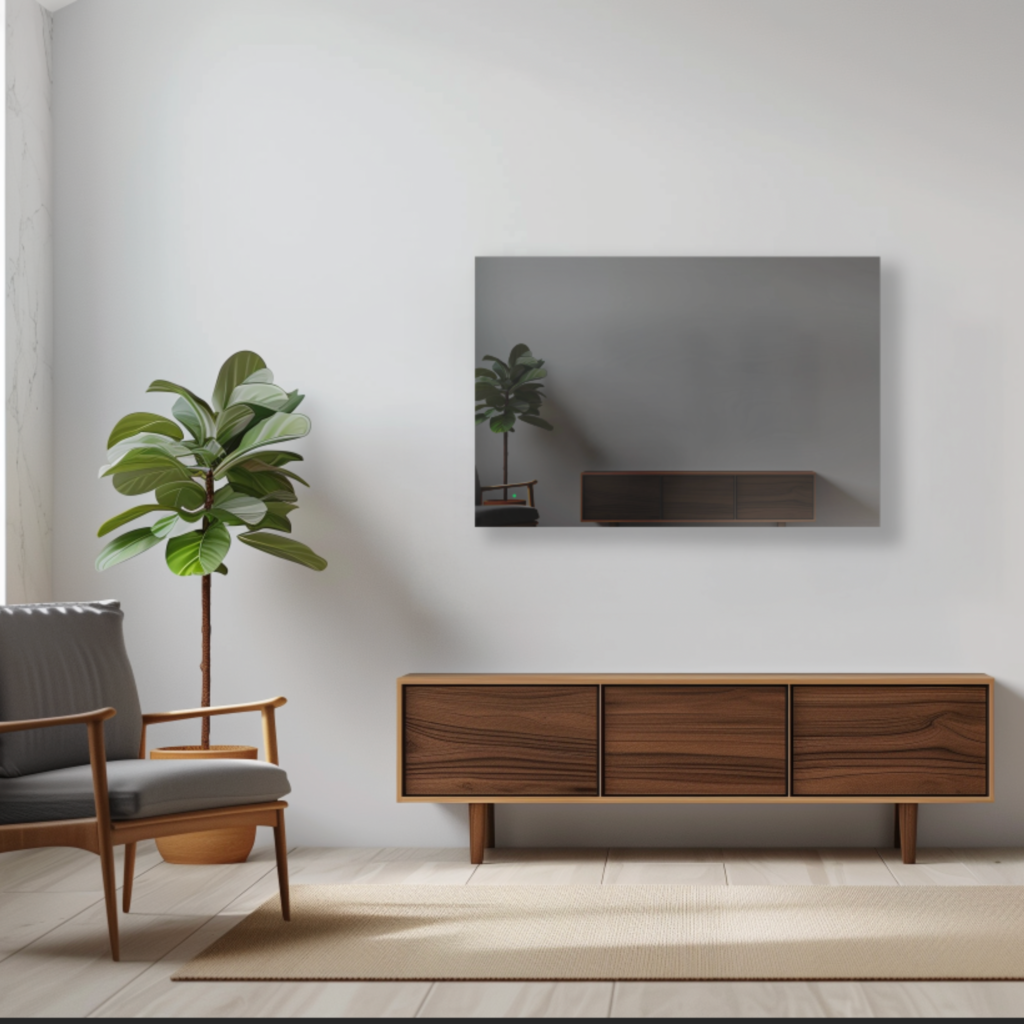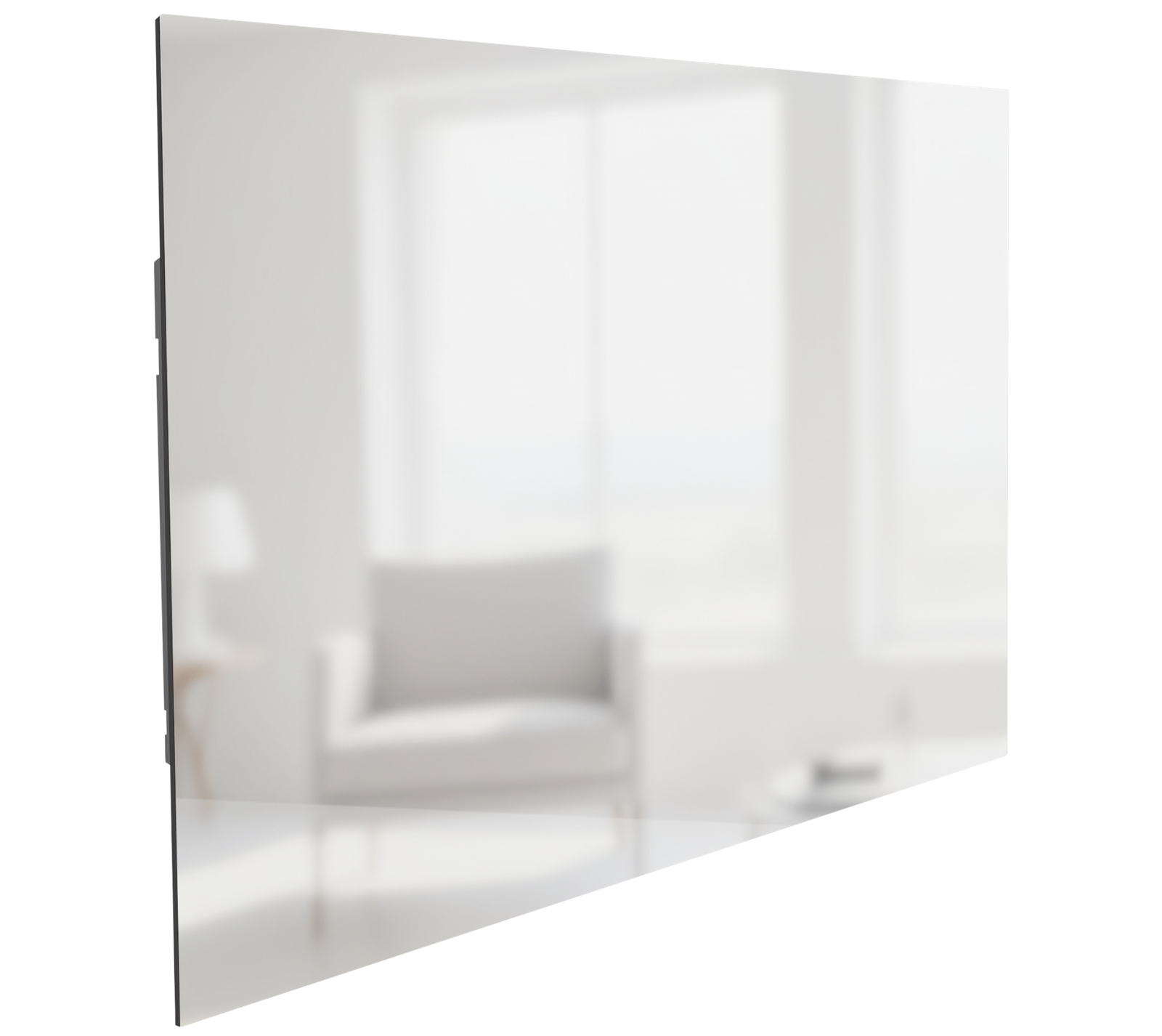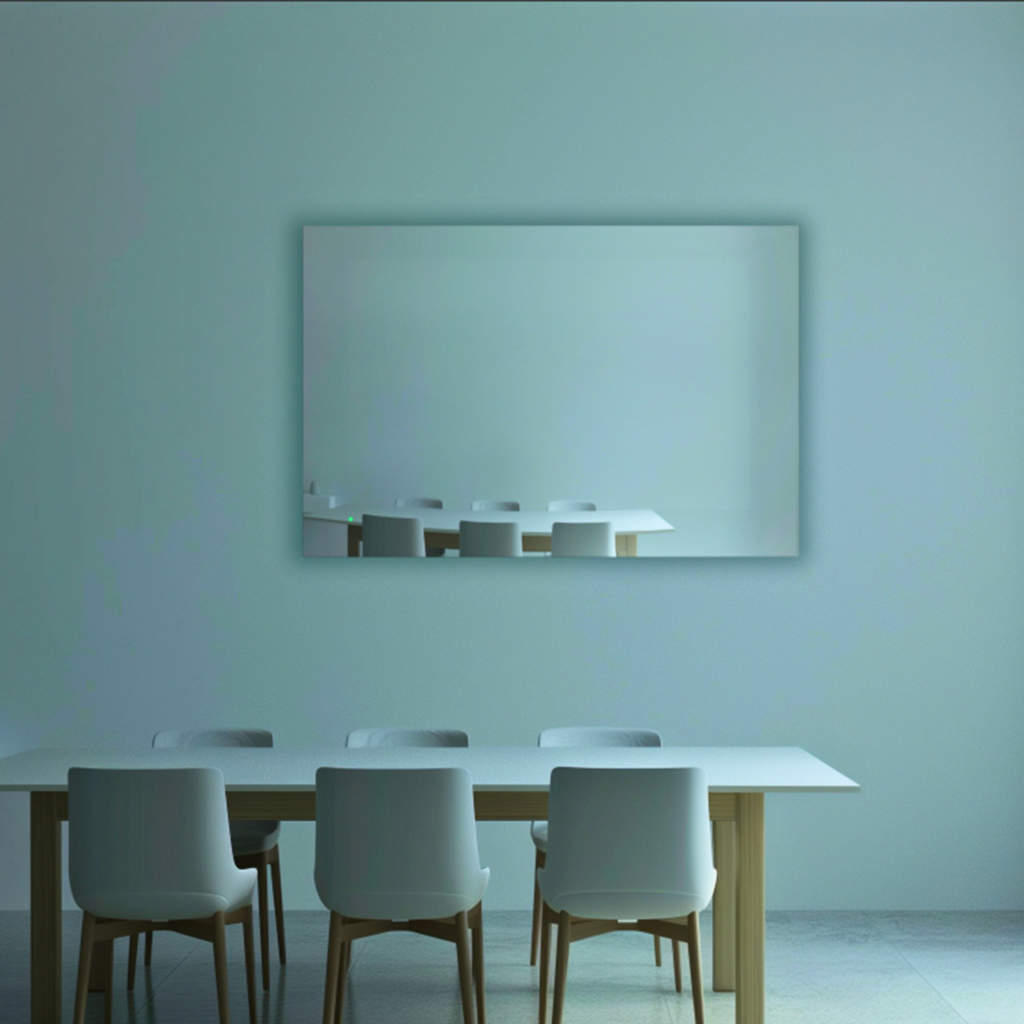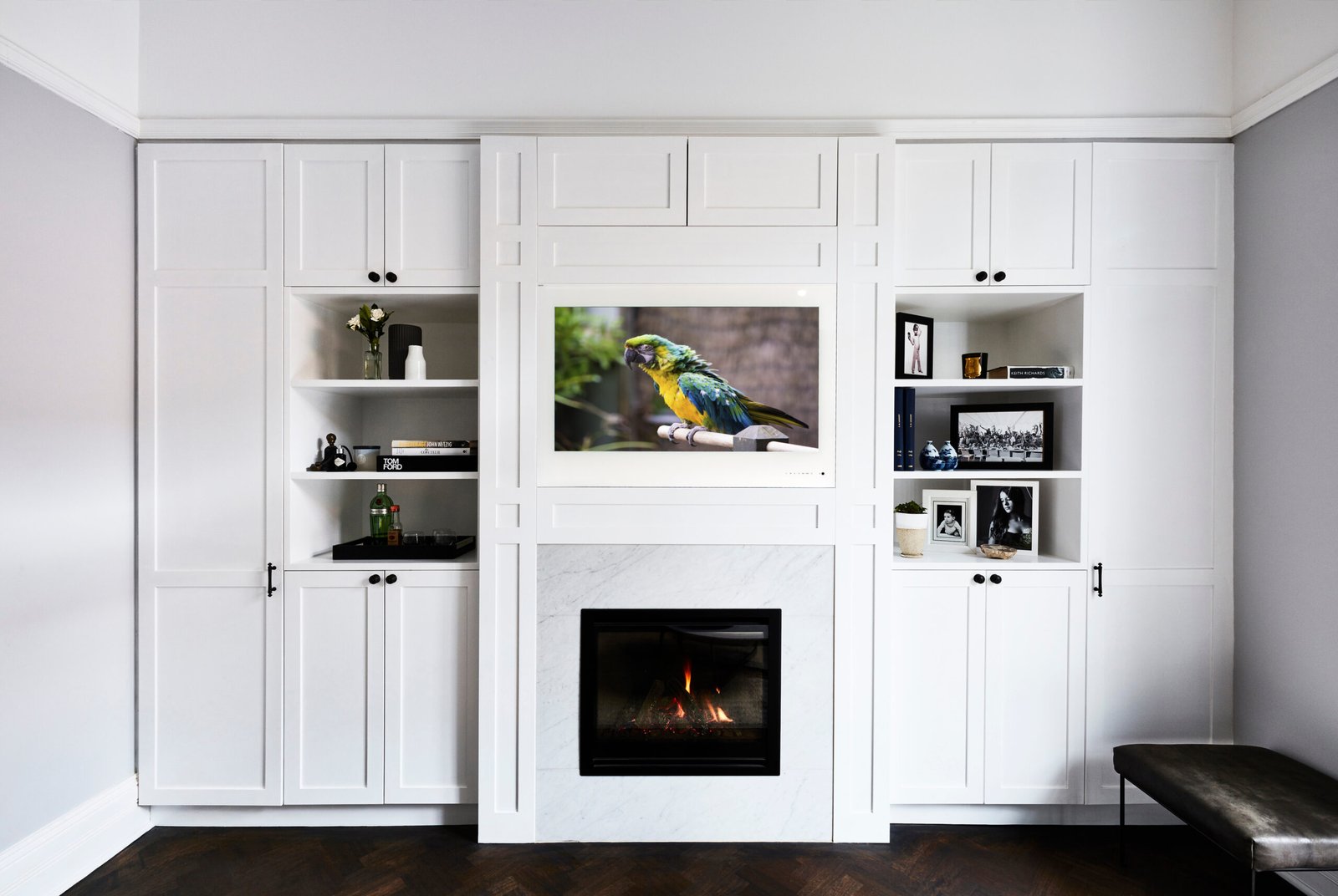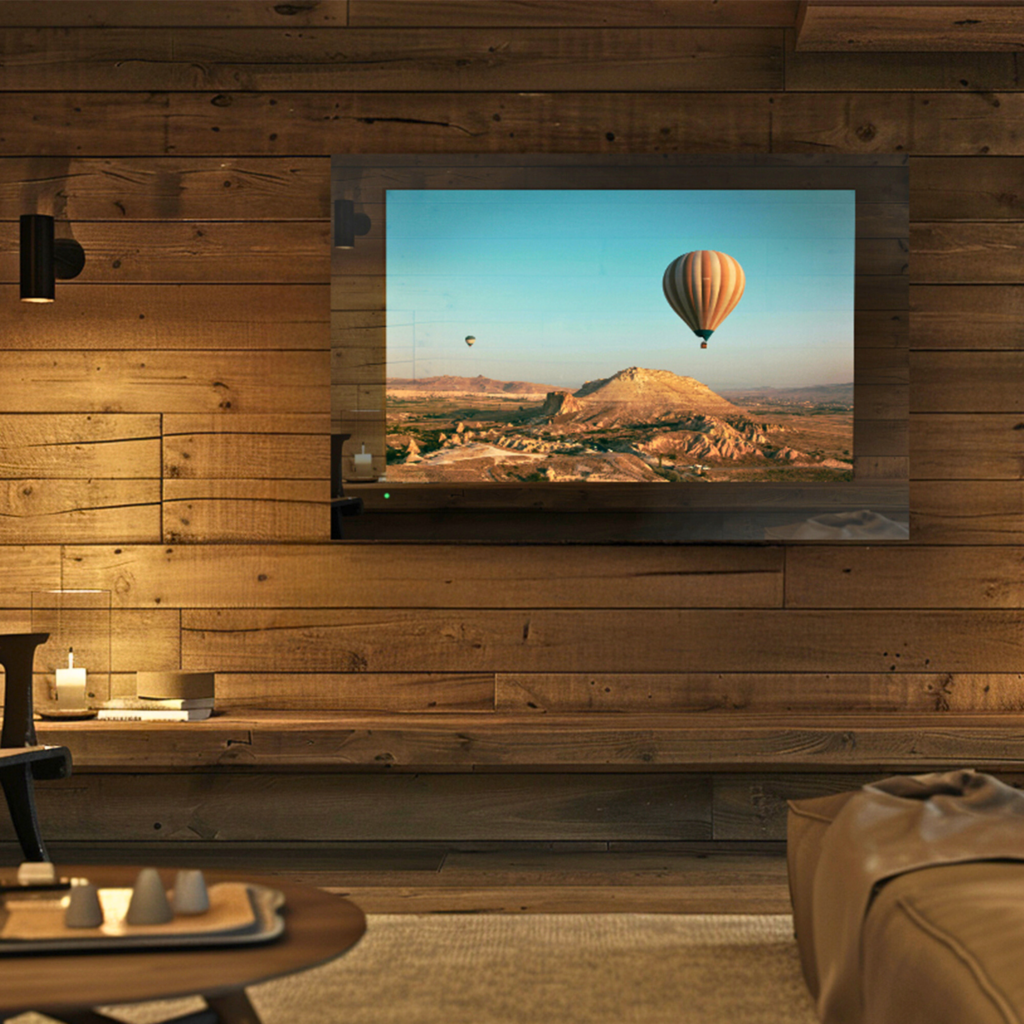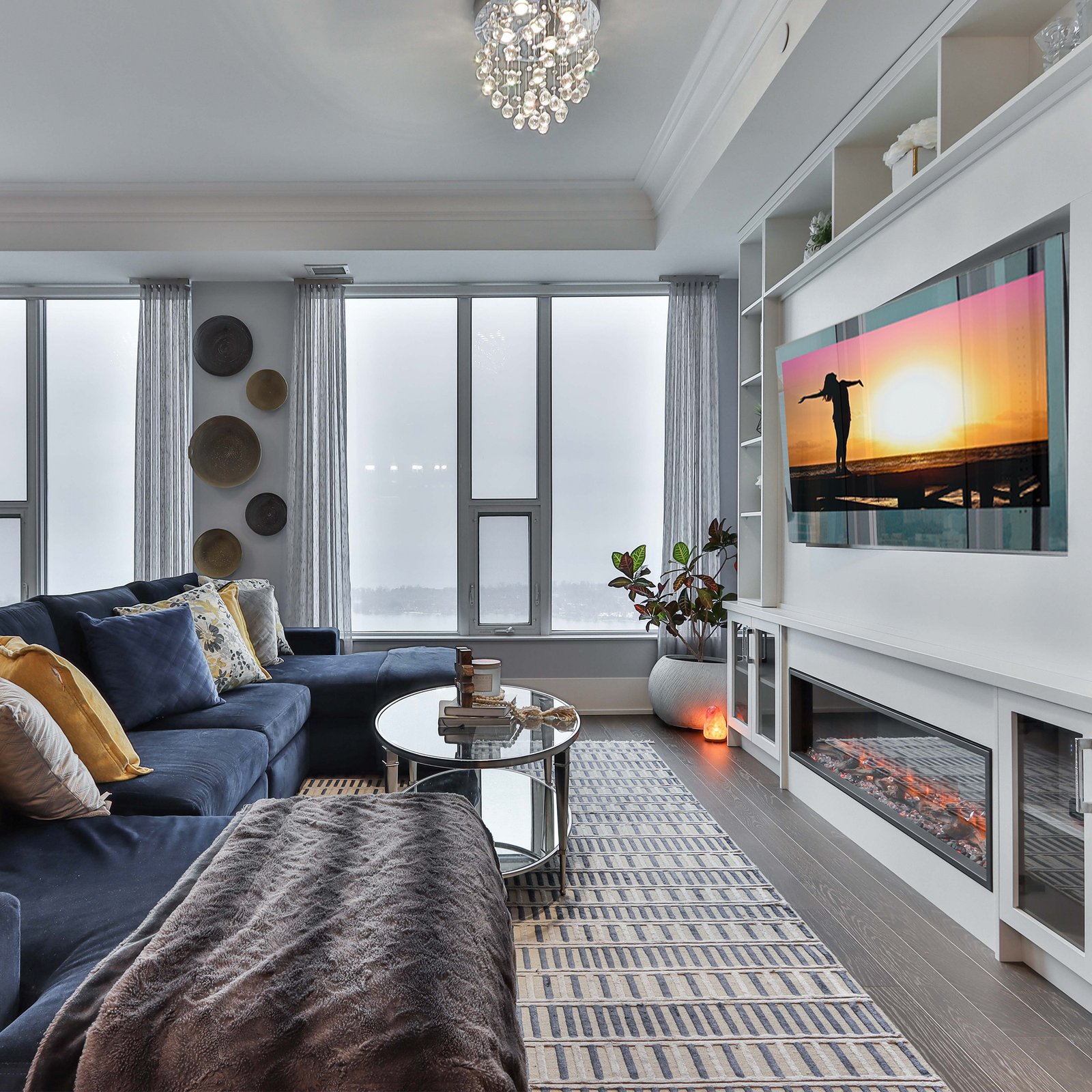
One of the most common questions people ask about mirror TV screens is “Will the picture actually look good in a bright room?”
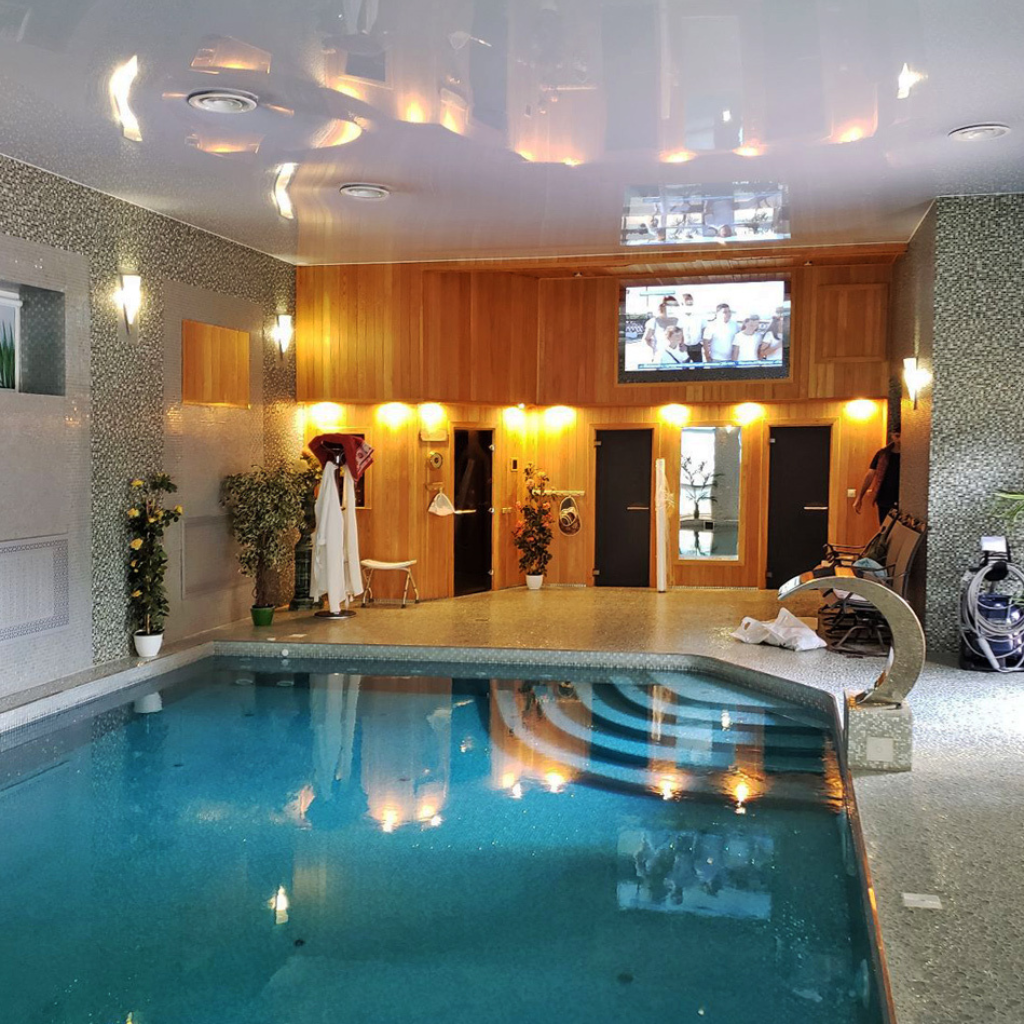
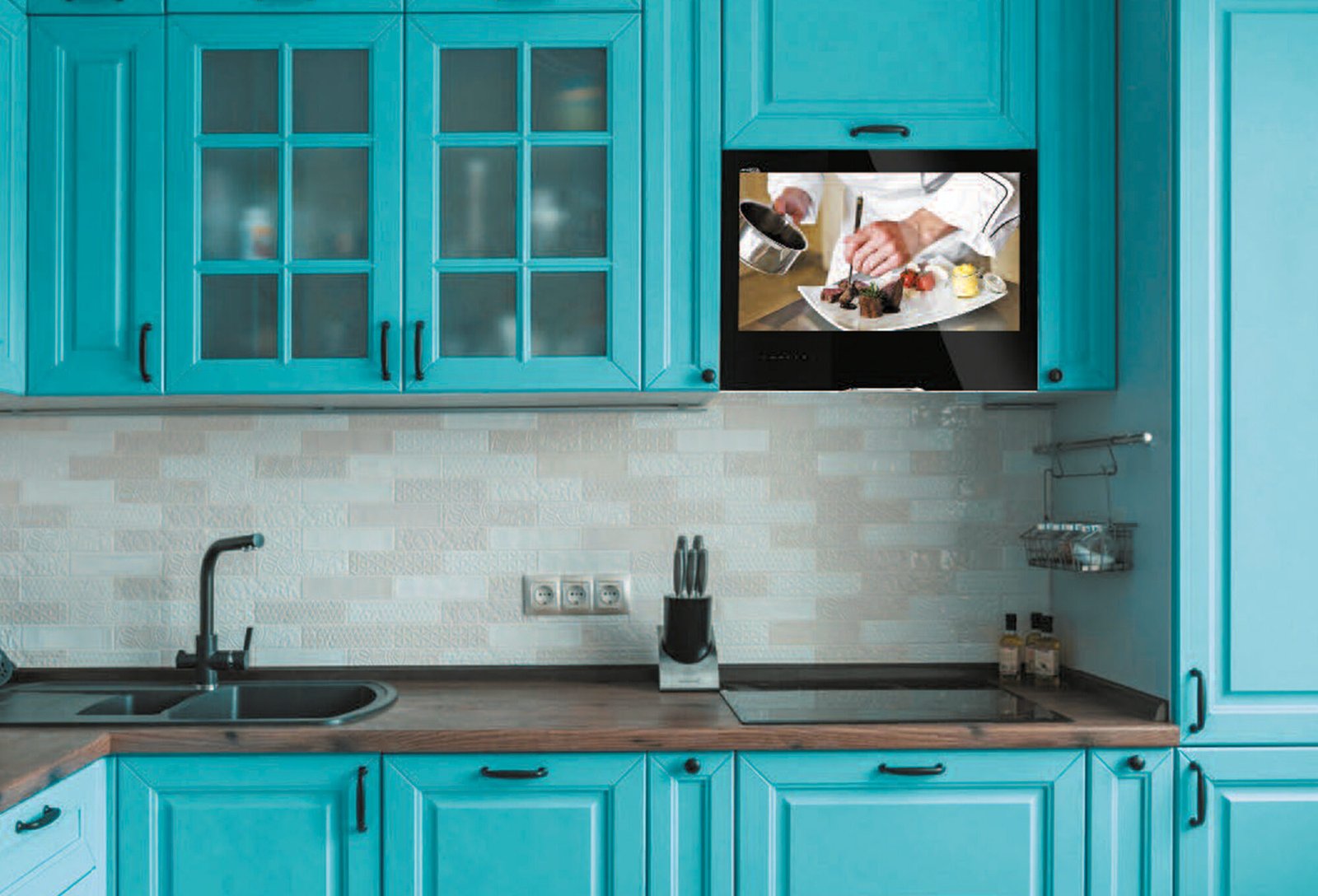
Bathrooms, kitchens, gyms, spas, and modern living spaces tend to have lots of light — natural light, overhead lighting, and reflective surfaces. Because a mirror TV is, by design, reflective, it has a tougher job than a standard television.
Whether a mirror TV works well in a bright space comes down to physics, human vision, and display engineering. Understanding those basics makes it much easier to choose the right mirror TV for your space.
The Fundamental Challenge: Reflection vs. Emission
A standard TV has a single job: emit light toward your eyes.
A mirror TV screen has two competing jobs:
- Reflect ambient light so it still functions as a mirror when the screen is off
- Transmit light from the display so the image is visible when the TV is on
This tradeoff is unavoidable. A mirror that didn’t reflect light wouldn’t be a mirror. The key is engineering the display behind the mirror to compensate.
The Optics: Why Mirror Glass Reduces Brightness
Mirror TV glass is partially reflective and partially transmissive. High-quality mirror TV glass typically:
- Reflects roughly 60–70% of ambient light
- Transmits roughly 30–40% of the display’s light
If a mirror TV display panel produces 1000 cd/m² (1000 nits) of brightness:
- About 30–40% reaches the viewer
- The perceived on-screen brightness becomes roughly 300–400 nits
This reduction isn’t a flaw. It’s simply how mirrors work.
Why Bright Rooms Expose Weaknesses Faster
Human vision perceives brightness relative to the environment, not in isolation.
Your eyes are constantly comparing:
- Screen luminance (how bright the image is)
- Ambient luminance (how bright the room is)
Typical examples:
- Dim living room: ~50–100 nits
- Bright kitchen or bathroom: ~200–400 nits
- Sunlit or highly reflective spaces: 400+ nits
For a mirror TV screen to look crisp and readable, its effective brightness must comfortably exceed the ambient light level. When it doesn’t, reflections lift the black level and the image appears washed out.
Why Mirror TVs Are Spec’d Brighter Than Standard TVs
This is why reputable mirror TV manufacturers start with brighter-than-average display panels.
Example comparison
Standard TV:
- Panel brightness: ~400–500 nits
- No mirror glass
- Effective brightness: ~400–500 nits
Mirror TV (properly engineered):
- Panel brightness: ~1000+ nits (depending on model and use case)
- Mirror transmission loss: ~60–70%
- Effective brightness: designed to land in the same usable range
The goal isn’t to chase extreme numbers — it’s to ensure that, after optical losses, the image still dominates reflections.
Why Different Mirror TVs Are Tuned for Different Spaces
Not all mirror TVs are meant for the same environments.
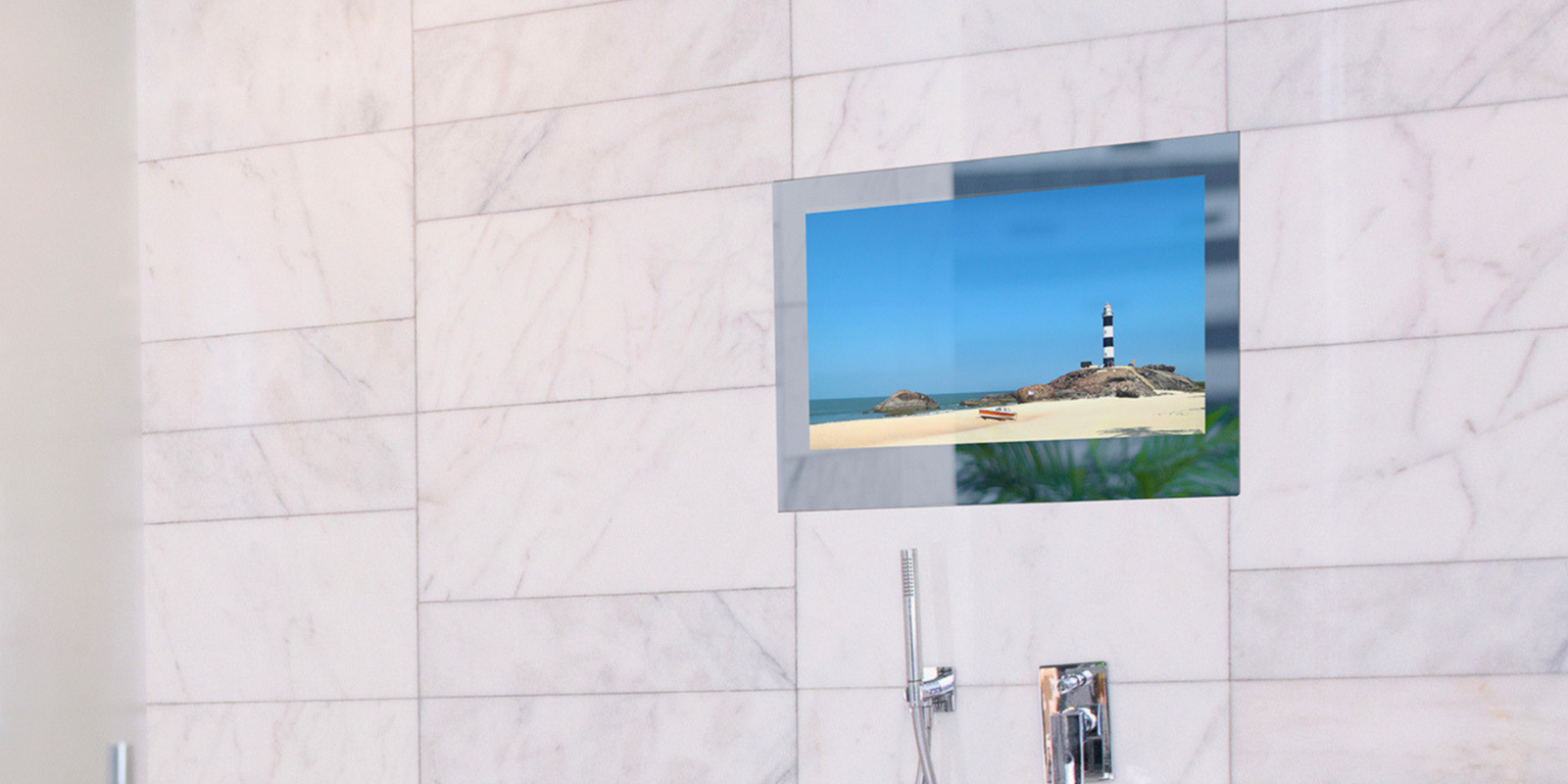
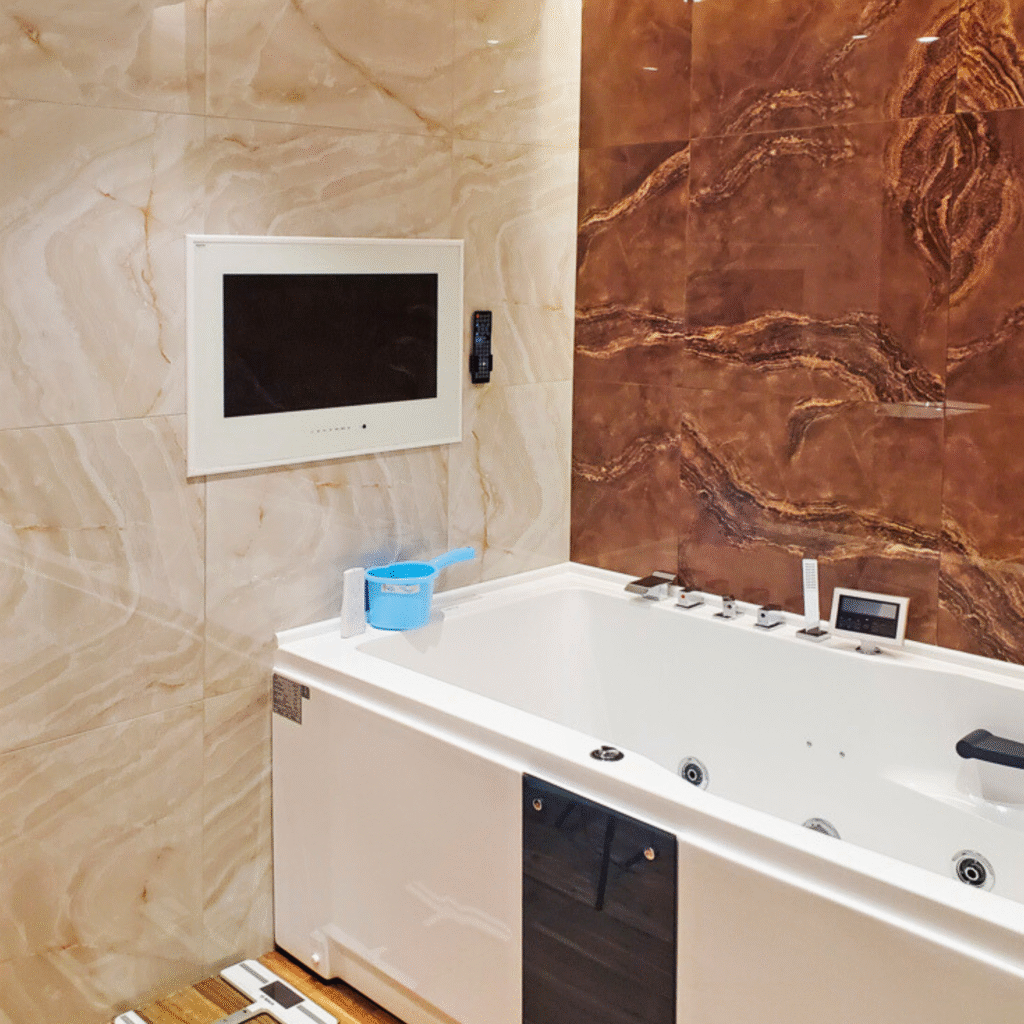
- Smaller mirror TVs (bathrooms, gyms) often face intense localized lighting and require higher brightness to remain readable
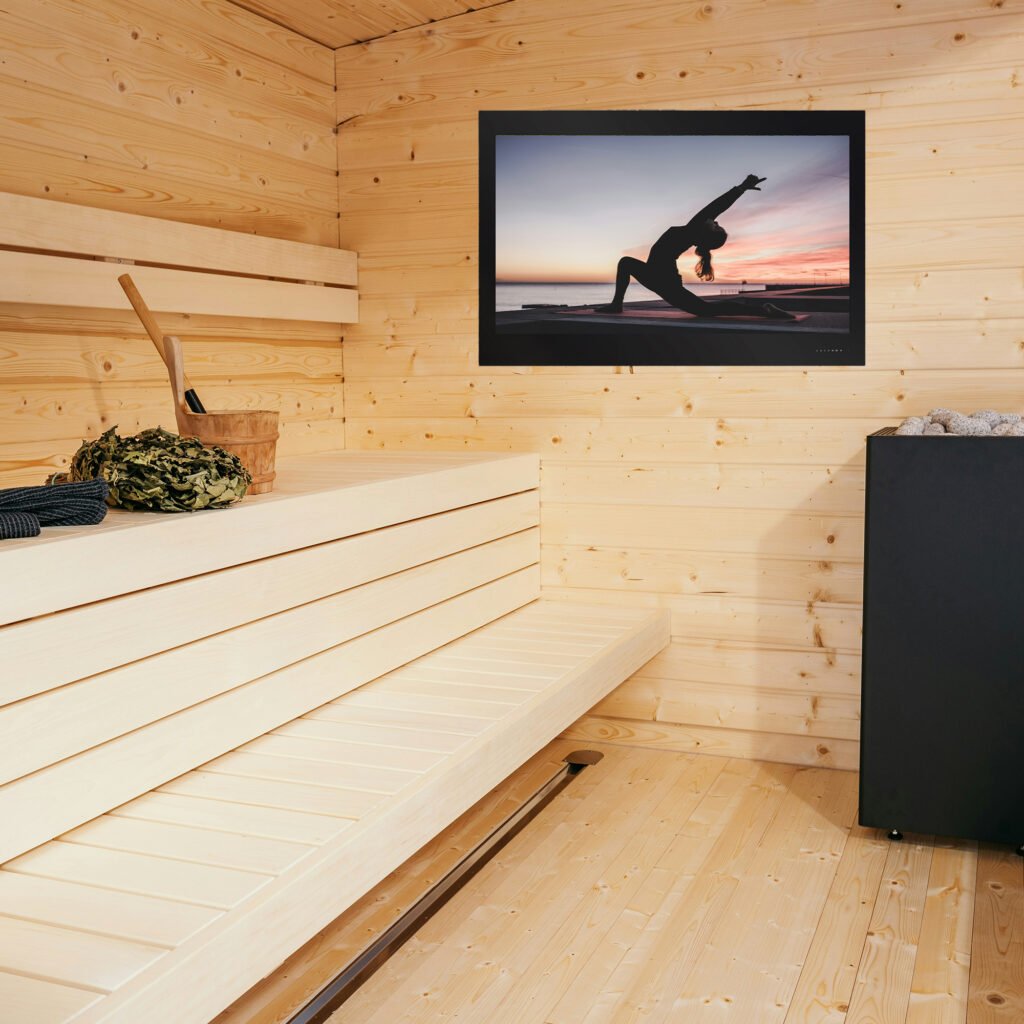
- Large-format mirror TVs are frequently installed in living rooms, bedrooms, or hospitality spaces where lighting can be controlled
In other words, brightness targets vary by use case.
Final Reflections
Mirror TVs can look excellent in bright rooms — when they’re engineered with the realities of reflection in mind.
The guiding principle is simple:
If a surface reflects light, the display behind it must produce more light.
At Parallel AV, this principle is applied differently depending on where the TV is meant to live.
- Our smaller Magic Mirror TVs are designed specifically for the brightest environments: for example, bathrooms, gyms, and spa spaces, where intense ambient light and reflective surfaces demand higher brightness to maintain image clarity.
- Our large-format Magic Mirror TVs are optimized for living rooms, bedrooms, and architectural spaces where lighting is typically more controlled, and where their brightness, contrast, and scale are more than sufficient to deliver a rich, readable image.
When brightness, contrast, and mirror glass are properly balanced for the space, a mirror TV doesn’t fight the room. It works with it, delivering both a functional mirror and a high-quality display.